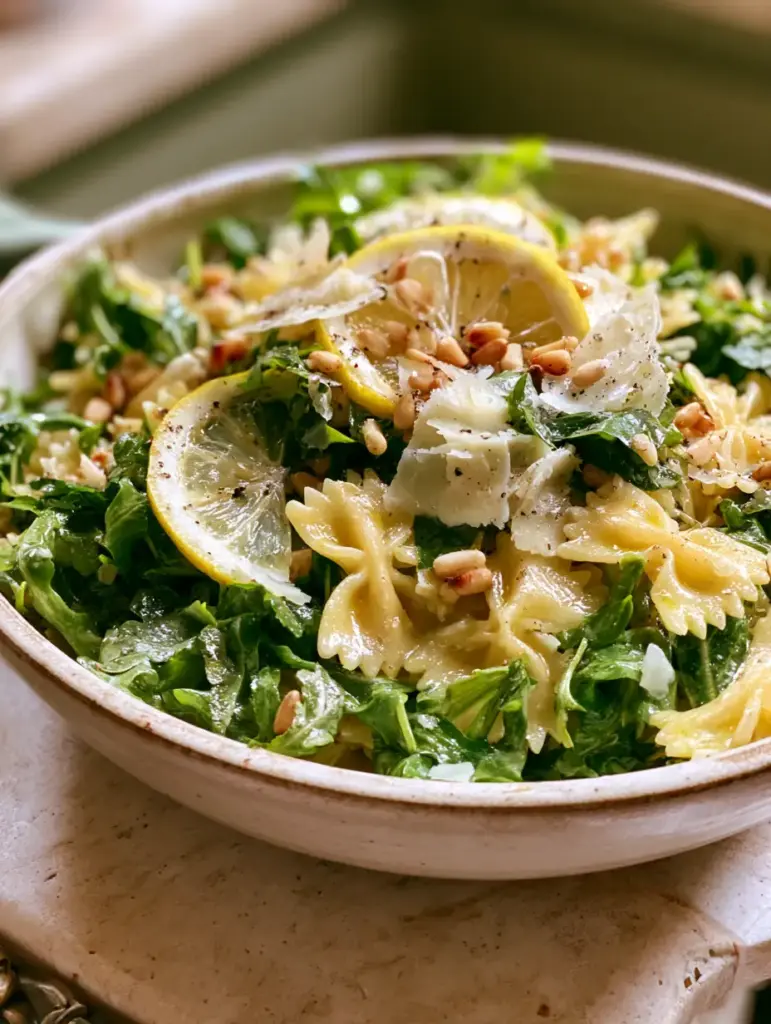
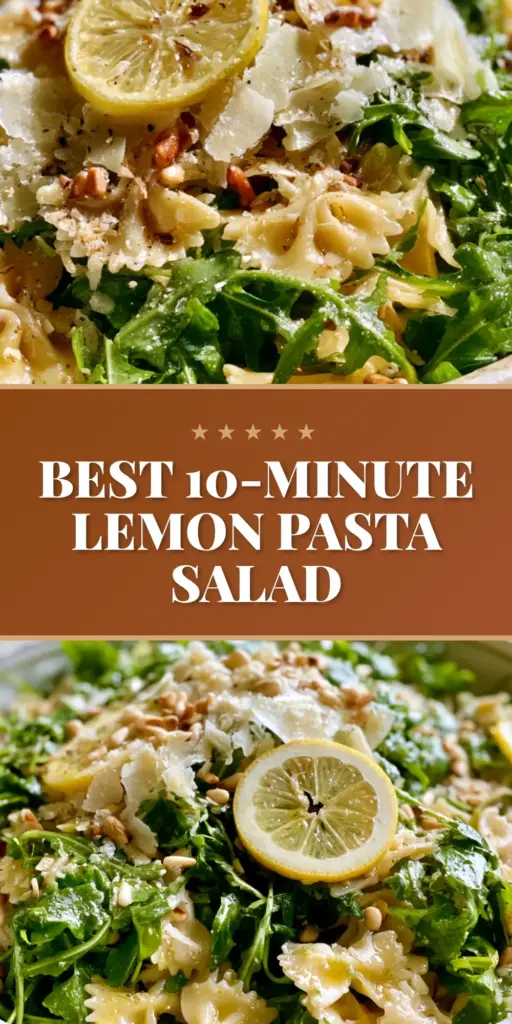
This lemon arugula pasta salad is the ultimate intersection of bright, citrusy acidity and the deep, peppery crunch of fresh greens. Imagine a rustic, handmade ceramic bowl filled with al dente farfalle pasta, each bow tie shimmering under a glossy, translucent lemon-olive oil vinaigrette. This isn’t just a side dish; it’s a sensory experience designed to capture the essence of a sun-drenched Mediterranean afternoon.
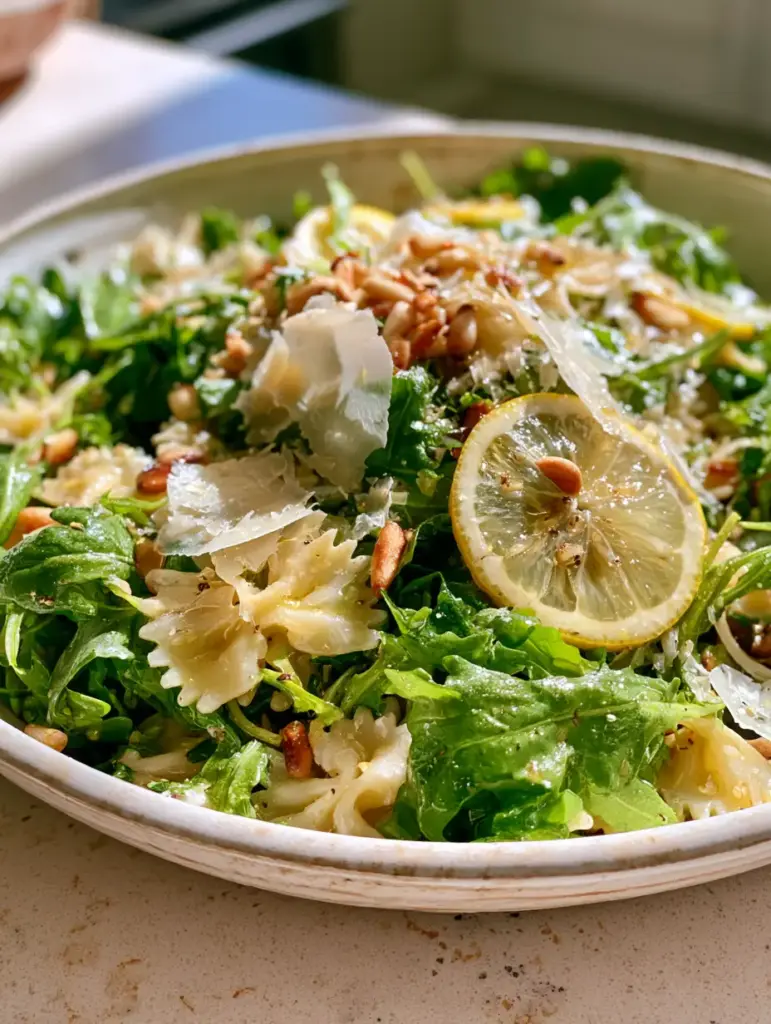
The visual appeal of this dish is undeniable, featuring high-volume clusters of vibrant baby arugula dotted with visible water droplets and topped with paper-thin, translucent lemon half-moons. Large, jagged shavings of aged parmesan cheese provide a sharp, salty contrast to the buttery, toasted golden-brown pine nuts scattered across the surface. Finished with cracked black pepper and a flurry of bright yellow lemon zest, every bite promises a sophisticated balance of textures.
Whether you are looking for a quick 10-minute lunch or a sophisticated addition to your next gathering, this recipe delivers professional-grade results with minimal effort. The secret lies in the emulsion of the dressing and the temperature of the pasta when combined with the greens. Let’s dive into the culinary science of crafting the perfect citrus-forward pasta bowl.
The Anatomy of a Perfect Summer Citrus Pasta
- Visual Texture Contrast: The combination of smooth, oily pasta surfaces against the matte, ruffled texture of baby arugula creates an appealing “high-low” visual dynamic.
- Flavor Architecture: We balance the inherent bitterness of the arugula with the fat of the extra virgin olive oil and the sharp umami of aged parmesan flakes.
- Aromatics: By using both fresh juice and zest, we maximize the volatile oils of the lemon, ensuring the scent hits the table before the first forkful is even taken.
- Structural Integrity: Using farfalle (bow tie) pasta provides “nooks and crannies” that trap the toasted pine nuts and lemon zest, ensuring a bit of everything in every bite.
Essential Pantry Staples for the Best Lemon Vinaigrette
To achieve that signature shimmering, glossy coating seen in high-end food photography, your ingredients must be of the highest quality. The dressing is a simple emulsion, but the chemistry must be exact to prevent the oil from separating and leaving the pasta greasy rather than coated.
Extra Virgin Olive Oil: Use a high-quality, cold-pressed oil with a peppery finish to complement the arugula. You will need 1/2 cup (120ml) to create the base of your glossy emulsion.
Fresh Lemon Juice: You’ll need 1/4 cup (60ml) of freshly squeezed juice; bottled juice lacks the bright enzymatic activity needed to “cut” the starch of the pasta. This acidity is what makes the lemon arugula pasta salad feel light rather than heavy.
Honey or Agave: A small amount, about 1 tsp (7g), acts as a stabilizer for the emulsion and balances the sharp citric acid. It ensures the dressing clings to the farfalle rather than sliding to the bottom of the bowl.
Dijon Mustard: Just 1/2 tsp (3g) provides the Lecithin necessary to bind the oil and water-based lemon juice together into a translucent, shimmering sauce. It adds a subtle depth without overpowering the citrus notes.
Kosher Salt and Cracked Black Pepper: Essential for drawing out the moisture in the arugula and seasoning the pasta from within. Use 1/2 tsp (3g) of salt and a generous 1/4 tsp (1g) of freshly cracked peppercorns.
The Foundation Ingredients for Texture and Bite
Farfalle Pasta: 1 lb (454g) of dried pasta. The “bow tie” shape is functionally superior here because the center pinch remains slightly firmer, providing that essential al dente “snap.”
Baby Arugula: 5 oz (142g) of fresh, pre-washed greens. Look for “baby” leaves as they are more tender and have a more delicate peppery profile than mature arugula. If you love this flavor profile, you should also try our peach arugula salad for a fruit-forward variation.
Aged Parmesan Cheese: 1/2 cup (50g) of large, jagged shavings. Avoid the pre-grated “dust”; you want wide flakes that provide a significant textural presence and a hit of salt.
Pine Nuts: 1/4 cup (35g) of toasted kernels. These provide the “crunch” factor and a rich, buttery undertone that rounds out the acidic lemon slices.
Fresh Lemons for Garnish: 2 medium lemons. One will be zested and juiced, while the other is sliced into paper-thin half-moons that are translucent enough to see the pasta through them.
Tools Required for Professional Visual Results
To recreate the macro-shot quality of this dish, certain tools are non-negotiable. A Microplane zester is required to achieve those tiny, bright yellow specs of zest that won’t feel “woody” in the mouth. A mandoline slicer is highly recommended for the lemon half-moons; achieving uniform, translucent slices by hand is difficult even for trained chefs.
You will also need a large stainless steel or ceramic mixing bowl to allow enough room for tossing the arugula without bruising the leaves. Finally, a dry skillet is essential for precision-toasting the pine nuts to that perfect golden-brown hue without the use of additional fats.
Mastering the 10-Minute Preparation Process
Toasting the Pine Nuts to Golden Perfection
Place your pine nuts in a cold, dry skillet over medium-low heat. Stir them constantly for 3–5 minutes until they release a nutty aroma and turn a uniform golden brown.
Immediately remove them from the hot pan onto a cool plate. Because of their high oil content, pine nuts will continue to cook and can burn in seconds if left in a hot skillet, losing their buttery sweetness and becoming bitter.
Achieving the Al Dente Farfalle Base
Bring 4 quarts (3.8L) of water to a rolling boil and season it with 2 tablespoons (34g) of kosher salt. The water should taste like the sea; this is your only chance to season the pasta itself.
Cook the farfalle for approximately 8–10 minutes, or until the center “pinch” still has a slight resistance when bitten. Drain the pasta, but do not rinse it; the surface starch is vital for helping the glossy lemon vinaigrette adhere to the noodles.
Whisking the Shimmering Lemon Vinaigrette
In a small glass jar or bowl, combine the lemon juice, honey, Dijon, salt, and pepper. Slowly drizzle in the extra virgin olive oil while whisking vigorously.
The dressing should transform from a separated liquid into a cohesive, translucent, and shimmering sauce. This emulsion is what gives the lemon arugula pasta salad its professional, “oily” glow without feeling greasy on the palate.
The Art of Assembly and Tossing
While the pasta is still slightly warm (but not hot), place it in your large bowl and pour half of the dressing over it. This allows the pasta to absorb the lemon flavor as it cools.
Once the pasta reaches room temperature, add the baby arugula, pine nuts, and the remaining dressing. Toss gently with tongs. Adding the arugula to cold pasta prevents wilting, while adding it to warm pasta creates a soft, integrated texture—we prefer the room-temperature approach for maximum volume.
Expert Tips for Success
- Temperature Control: Never toss the arugula with piping hot pasta. The residual heat will turn the vibrant greens into a dark, slimy mess. Wait until you can comfortably touch the pasta with your bare hands.
- Mandoline Safety: When slicing the lemon half-moons, use a guard. You want slices so thin they are practically see-through, which enhances the visual “shimmer” of the final plate.
- Make-Ahead Strategy: If preparing for a party, keep the dressing, pasta, and greens separate. Combine them no more than 20 minutes before serving to maintain the “high-volume clusters” of arugula.
- Quality of Parmesan: Use a vegetable peeler on a block of Parmigiano-Reggiano to get those beautiful, wide, jagged edges that look so striking in food photography.
Storing and Refreshing Your Leftovers
This lemon arugula pasta salad is best enjoyed fresh, as the acidity in the lemon will eventually begin to “cook” the arugula, causing it to lose its crunch. However, it can be stored in an airtight container in the refrigerator for up to 2 days.
To refresh leftovers, add a fresh handful of baby arugula and a quick squeeze of lemon juice. Do not freeze this salad; the emulsion will break, and the arugula will lose all structural integrity upon thawing.
Creative Pairings for a Full Summer Spread
This light and zesty pasta serves as an incredible base for a larger meal. If you are hosting a summer cookout, pair it with a hearty Mexican street corn pasta salad for a duo of contrasting flavors. For those who enjoy more classic garden flavors, a caprese pasta salad offers a creamy mozzarella balance to the sharp arugula.
If you’re leaning into the Mediterranean theme, serve this alongside a mediterranean feta salad or even a light watermelon feta salad for a refreshing dessert-like side. The acidity of the lemon in this dish also cuts beautifully through the richness of a bacon ranch pasta salad if you are serving a large crowd with diverse tastes.
Frequently Asked Questions
Yes, provided they are sliced thin enough to be translucent. When sliced paper-thin (preferably with a mandoline), the rind and pith become tender enough to eat, providing a burst of concentrated citrus flavor that complements the vinaigrette.
Yes, but store the components separately. Keep the cooked pasta tossed in a little oil, the dressing in a jar, and the arugula in its container. Combine them no more than 30 minutes before serving to ensure the greens stay crisp and the nuts stay crunchy.
The secret is temperature control. Ensure your farfalle pasta has cooled to room temperature before tossing it with the baby arugula. If the pasta is hot, the residual heat will steam the greens, causing them to lose their volume and turn slimy.
No, do not rinse the pasta. The natural starches on the surface of the farfalle help the lemon vinaigrette emulsify and cling to the noodles, creating that signature glossy, shimmering finish.
If you don’t have pine nuts, toasted slivered almonds or chopped walnuts are excellent substitutes. They provide a similar buttery crunch that balances the acidic lemon and peppery arugula.
The Ultimate 10-Minute Lemon Arugula Pasta Salad Recipe
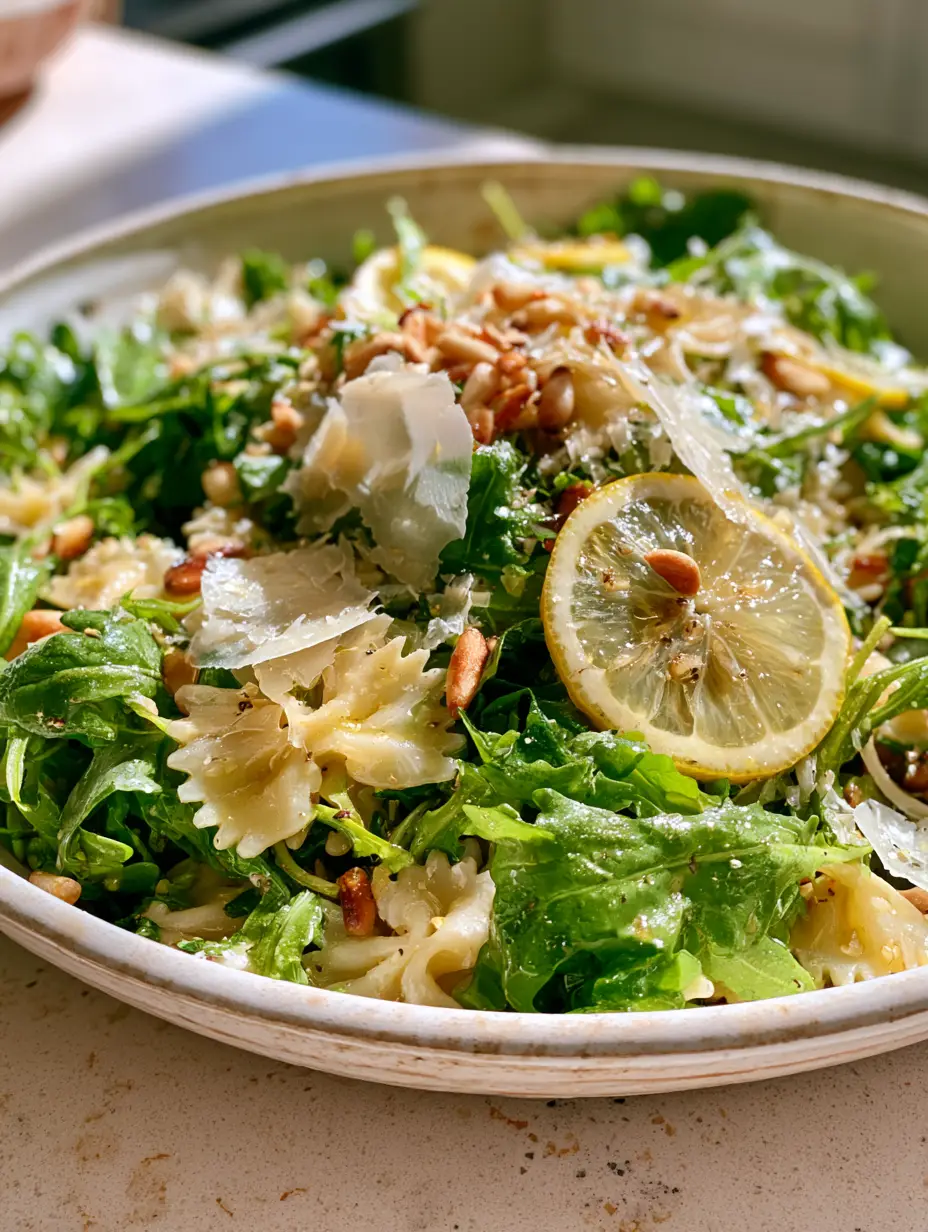
Lemon Arugula Pasta Salad with Shaved Parmesan and Pine Nuts
Ingredients
Equipment
Method
- Cook farfalle in salted boiling water for 8-10 minutes until al dente. Drain and do not rinse.
- Toast pine nuts in a dry skillet over medium-low heat for 3-5 minutes until golden brown and fragrant.
- Whisk together lemon juice, zest, honey, Dijon, salt, and pepper. Slowly drizzle in olive oil while whisking until glossy.
- Toss room-temperature pasta with the vinaigrette and baby arugula. Top with parmesan flakes, toasted pine nuts, and translucent lemon slices.
Notes
Use a vegetable peeler to get wide, jagged parmesan shavings for the best texture.
Closing & Call to Action
This lemon arugula pasta salad is a testament to the power of simple, high-quality ingredients. By focusing on the emulsion of the vinaigrette and the crispness of the arugula, you can create a restaurant-quality meal in under 15 minutes. The bright citrus notes and the crunch of toasted pine nuts make it a perennial favorite for spring and summer dining.
If you enjoyed this recipe, please leave a comment below and let us know how yours turned out! Don’t forget to sign up for our newsletter for more culinary deep-dives and professional kitchen tips. Ready to cook? Save this recipe to your “Summer Recipes” board on Pinterest so you never lose it!