The ultimate Caprese Pasta Salad is more than just a side dish; it is a celebration of peak summer ingredients and Italian culinary simplicity. Inspired by the classic flavors of the Isle of Capri, this recipe transforms the traditional tomato-mozzarella-basil trio into a hearty, crowd-pleasing bowl of comfort.
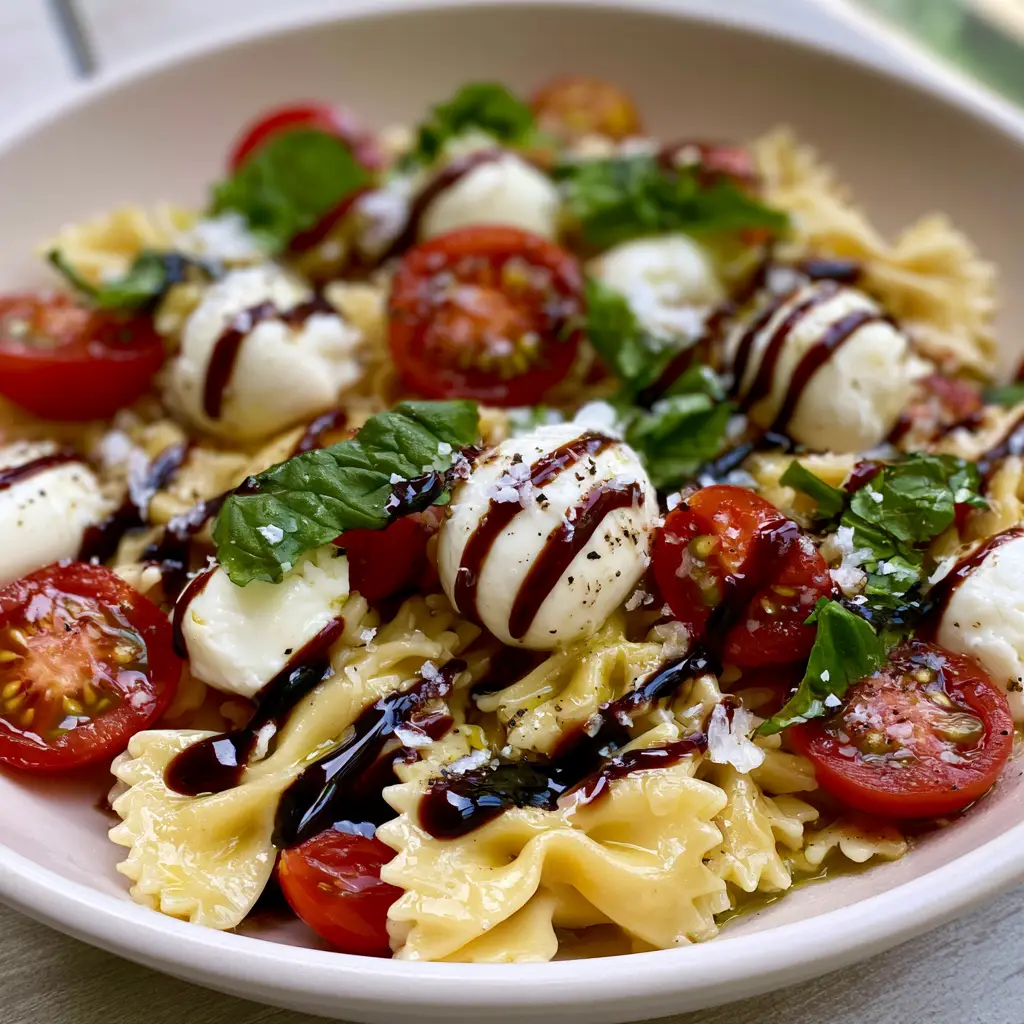
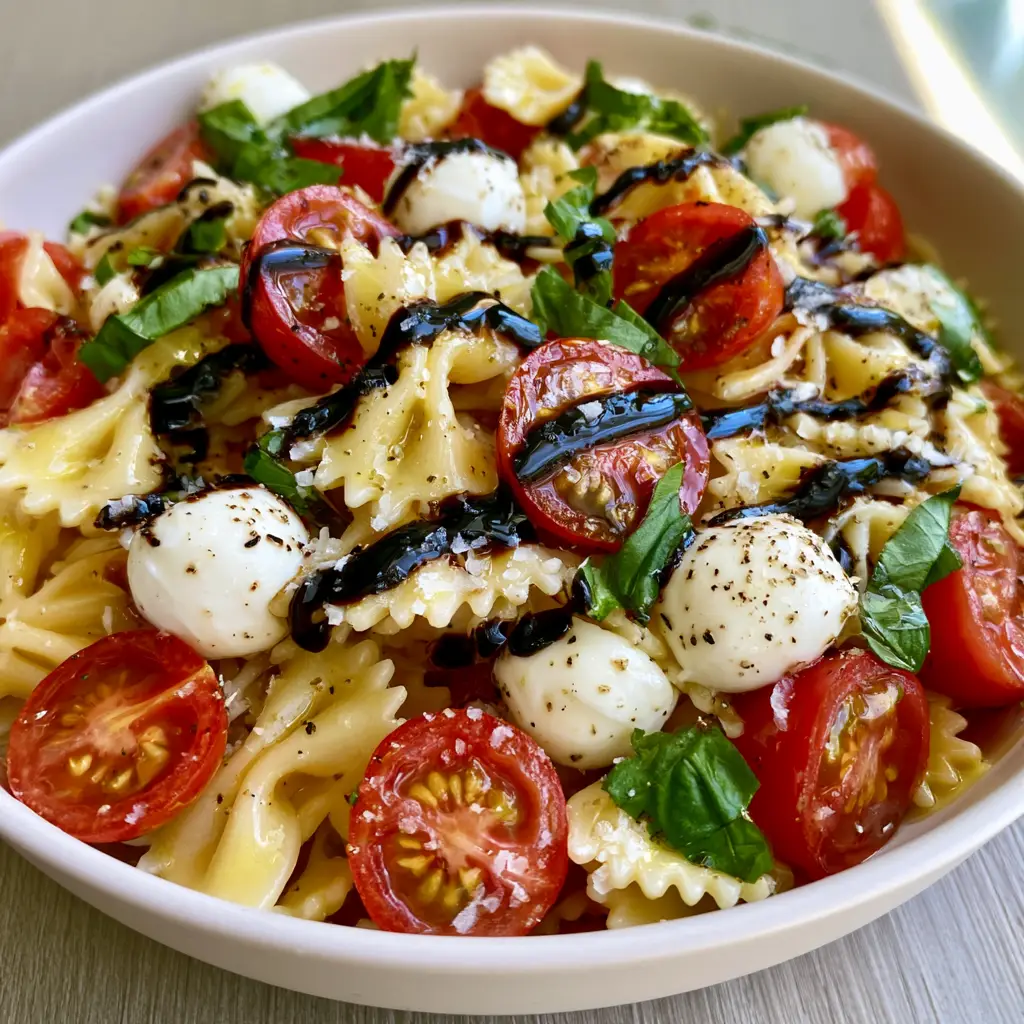
Picture a wide, matte white ceramic bowl filled with perfectly al dente bowtie pasta, each ridge glistening with premium extra virgin olive oil. Nestled among the folds are juicy cherry tomato halves, plump mozzarella pearls, and hand-torn basil leaves that release their aroma with every forkful. The crowning glory is a meticulous zig-zag of high-viscosity balsamic glaze that clings to the pasta, finished with a deliberate dusting of flaky sea salt and coarse cracked black pepper.
Whether you are preparing a quick weekday lunch or looking for the star of your next garden party, this Caprese Pasta Salad delivers a restaurant-quality experience right in your home kitchen. It captures the essence of natural daylight and fresh garden harvests in every bite.
Why This Caprese Pasta Salad Is the Ultimate Summer Staple
- Textural Harmony: The contrast between the firm, “to-the-tooth” farfalle and the soft, creamy mozzarella pearls creates a sophisticated mouthfeel.
- Visual Brilliance: The vibrant red of the juicy tomato interiors pops against the stark white mozzarella and deep green basil, exactly like a professional food photograph.
- Bold Flavor Cues: The thick, almost-black balsamic glaze provides a sweet and tangy punch that balances the richness of the extra virgin olive oil.
- Seasoning Precision: Using flaky sea salt and coarse black pepper ensures that every ingredient is highlighted without being overpowered.
The Essential Ingredients for Your Caprese Pasta Salad
To achieve the visual and culinary perfection seen in our high-end smartphone photography, you must start with the right foundation. Every ingredient in this Caprese Pasta Salad has been selected for its ability to hold up under a thick glaze and provide a burst of freshness.
16 oz (450g) Farfalle (Bowtie) Pasta: The unique shape of farfalle is essential because the “pinched” center remains slightly firmer, while the wings catch the oil and glaze. This creates the “glistening” effect that is hallmarks of a well-executed pasta salad.
2 cups (300g) Cherry Tomatoes: Look for tomatoes that are bright red and firm to the touch. When halved, they should reveal juicy interiors and visible seeds, adding a necessary moisture component to the dish.
8 oz (225g) Fresh Mozzarella Pearls: Often sold as “ciliegine,” these plump, stark-white spheres provide a mild, creamy counterpoint to the acidic tomatoes. Do not use shredded mozzarella; the pearls are vital for the structural integrity of the salad.
1 cup (30g) Fresh Basil Leaves: Deep green and aromatic, the basil must be hand-torn. Tearing the leaves rather than slicing them with a knife prevents the edges from oxidizing and turning black, preserving that vibrant garden look.
1/4 cup (60ml) Extra Virgin Olive Oil: This is your base foundation. A high-quality oil will coat the pasta, making it shine under natural light and preventing the noodles from sticking together as they cool.
3 tbsp (45ml) Balsamic Glaze: This is not the same as balsamic vinegar. You need a thick, syrupy glaze with high viscosity to achieve that meticulous zig-zag pattern that stays in place rather than pooling at the bottom of the bowl.
1 tsp (5g) Flaky Sea Salt: Large crystals of salt, like Maldon, provide a subtle crunch and a focused burst of salinity that enhances the sweetness of the tomatoes.
1/2 tsp (2g) Coarse Cracked Black Pepper: Freshly cracked pepper provides a visual “speckled” look and a woody heat that cuts through the creaminess of the mozzarella.
The Culinary Equipment You Will Need
While this recipe is simple, using the right tools ensures the professional finish described in our visual blueprint. You will need a large stockpot to boil the pasta in plenty of salted water, allowing the farfalle to move freely and cook evenly.
A wide, matte white ceramic bowl is highly recommended for serving. The matte finish of the bowl prevents harsh glares from side-window light, allowing the natural colors of the Caprese Pasta Salad to take center stage. You will also need a sharp chef’s knife to cleanly halve the tomatoes without crushing them.
Step-by-Step Instructions to Perfect Caprese Pasta Salad
Mastering the Al Dente Farfalle
Bring a large pot of heavily salted water to a rolling boil. Add the 16 oz (450g) of farfalle pasta and cook according to the package directions, but begin testing for doneness 2 minutes early. You are looking for a firm “snap” in the center—the classic al dente texture.
Drain the pasta and immediately toss it with 1 tbsp (15ml) of the extra virgin olive oil while it is still warm. This “invisible” step is the secret to the glistening coating seen in the prompts; it seals the surface of the pasta and prevents it from absorbing too much of the dressing later.
Preparing the Fresh Produce
While the pasta cools slightly, halve your cherry tomatoes. Aim for a clean cut that showcases the seeds and juice. Set them aside in a small bowl to prevent the juices from being lost on the cutting board.
Take your fresh basil and, using your hands, tear the leaves into bite-sized, irregular pieces. This rustic preparation method ensures that the aromatic oils are released just before serving, filling your kitchen with a sweet, peppery scent.
The Art of Assembly and the Zig-Zag Drizzle
In your wide ceramic bowl, combine the cooled farfalle, halved tomatoes, and mozzarella pearls. Drizzle the remaining extra virgin olive oil over the mixture and toss gently with large spoons. Ensure every piece of pasta has a light, oily sheen.
Scatter the hand-torn basil generously over the top. Now, for the most critical visual element: take your balsamic glaze and, starting from one side of the bowl, move your hand in a steady zig-zag motion across the entire surface. The high viscosity should allow the glaze to cling to the ridges of the bowtie pasta.
The Final Flourish of Seasoning
Finish the dish by sprinkling the flaky sea salt and coarse cracked black pepper over the mozzarella pearls. This provides the final sensory cue of a professional dish—the visual contrast of the dark pepper and white salt against the bright colors of the salad.
Expert Tips for a Professional Result
- Temperature Control: Never add the mozzarella pearls to hot pasta. Wait until the farfalle is at room temperature to prevent the cheese from melting and losing its pearl-like shape.
- Oil Quality: Since there are so few ingredients, the flavor of your olive oil matters. Use a cold-pressed extra virgin olive oil for a peppery, fruity finish.
- Glaze Consistency: If your balsamic glaze is too thin, you can simmer it in a small saucepan for 5 minutes until it coats the back of a spoon. A thick glaze is essential for that meticulous zig-zag look.
- Basil Timing: Only add the basil at the very last second. Basil is sensitive to both heat and air; adding it too early will result in wilted, dark leaves.
How to Store and Refresh Your Pasta Salad
This Caprese Pasta Salad is best enjoyed fresh, but it can be stored in an airtight container in the refrigerator for up to 3 days. Note that the pasta will absorb the oil over time, so it may lose its “glisten.”
To refresh the salad, bring it to room temperature for 15 minutes and add a small drizzle of fresh olive oil. Re-apply a small amount of balsamic glaze and a fresh pinch of flaky salt just before eating to revive the vibrant flavors.
What to Serve with This Vibrant Pasta Salad
This dish is incredibly versatile and pairs beautifully with other summer favorites. If you are hosting a large gathering, consider creating a “salad bar” by pairing this with a creamy Mexican street corn pasta salad for a variety of textures.
For a lighter, fruit-forward option, a refreshing watermelon and feta salad provides a sweet contrast to the savory balsamic glaze. If you prefer stone fruits, this peppery peach and arugula salad is a sophisticated companion to the Caprese flavors.
If you have extra garden vegetables on hand, you might also enjoy making a fresh summer garden pasta to serve alongside grilled proteins like chicken or shrimp. The simplicity of the Caprese Pasta Salad makes it the perfect anchor for any Mediterranean-inspired meal.
Frequently Asked Questions
Yes, but wait to add the basil and balsamic glaze until just before serving. This keeps the herbs from wilting and the glaze from bleeding into the pasta.
Balsamic vinegar is much thinner and will pool at the bottom of the bowl. For the iconic zig-zag look and clinging texture, you must use a reduced balsamic glaze.
Toss the pasta with a tablespoon of extra virgin olive oil immediately after draining. This creates a barrier that keeps the farfalle separate while it cools.
Use a sharp serrated knife or a very sharp chef’s knife to slice through the skin quickly, ensuring the juicy interior and seeds remain intact within the halves.
Chopping basil with a metal knife bruises the delicate leaves and causes them to turn black. Tearing them by hand preserves their vibrant green color and fresh aroma.
The Ultimate Caprese Pasta Salad Recipe
Caprese Pasta Salad with Thick Balsamic Glaze and Fresh Basil
Ingredients
Equipment
Method
- Cook farfalle in heavily salted boiling water until al dente. Drain and toss with 1 tbsp (15ml) of olive oil to create a glistening coating.
- Allow the pasta to cool to room temperature in a wide bowl to prevent the mozzarella from melting.
- Fold in halved cherry tomatoes and mozzarella pearls. Drizzle with the remaining olive oil and toss gently.
- Scatter hand-torn basil over the top and apply the balsamic glaze in a meticulous zig-zag pattern.
- Finish with a generous sprinkle of flaky sea salt and coarse cracked black pepper for visual and flavor contrast.
Notes
Always tear basil by hand to avoid browning the edges.
Bring the Taste of Italy to Your Table
The Caprese Pasta Salad is a testament to the fact that high-quality ingredients don’t need a lot of fuss to shine. By following these steps and focusing on the visual cues—the glistening oil, the thick glaze, and the fresh basil—you can create a dish that is as beautiful to look at as it is delicious to eat.
We invite you to share your culinary creations with us! If you made this recipe, leave a comment below and let us know how it turned out. Don’t forget to save this recipe to your favorite boards on Pinterest so you can find it whenever that summer craving hits.