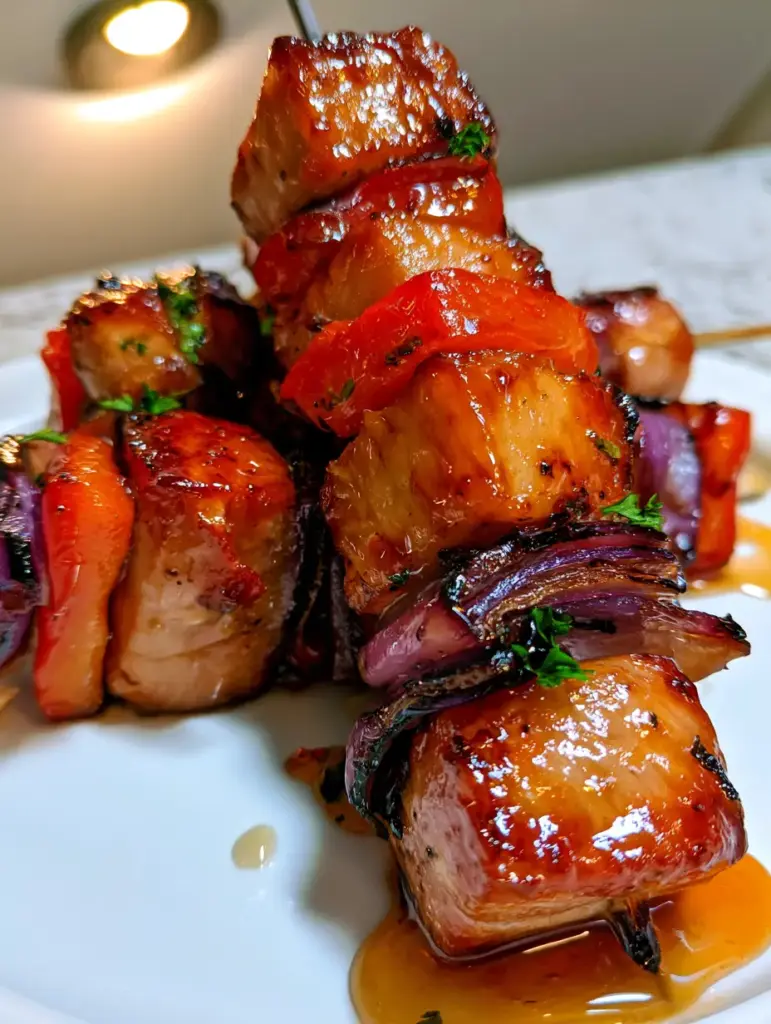
There is nothing quite like the sight of grilled pork kabobs resting on a platter, their golden-caramelized edges catching the afternoon sun. These aren’t just your standard backyard skewers; they are a masterclass in texture and balance, featuring succulent pork tenderloin and vibrant vegetables. Each bite offers a symphony of flavors, from the deep char of the grill to the sweet, syrupy notes of a translucent amber glaze.
The secret to these skewers lies in the contrast between the high-heat sear and the delicate honey garlic coating. By using pork tenderloin, we ensure a lean yet incredibly juicy result that pairs perfectly with the snap of blistered red bell peppers. Whether you are hosting a summer soirée or a quick weeknight dinner, these kabobs deliver a restaurant-quality experience right from your grill grates.
Visually, this dish is a showstopper, boasting deep purple charred onion petals and bright green scallions against the glistening meat. The dusting of toasted white sesame seeds adds a final layer of crunch and nutty aroma that ties the entire meal together. Let’s dive into how you can achieve these professional-grade results in your own kitchen.
Why You Will Love These Honey Garlic Pork Skewers
- Perfectly Seared Texture: We use high-heat techniques to achieve those coveted golden-brown sear marks while keeping the interior moist and tender.
- Glistening Amber Glaze: The thick, translucent honey garlic sauce provides a professional finish that clings to every crevice of the meat.
- Vibrant Visual Appeal: The combination of blistered red bell pepper squares and charred red onion petals creates a stunning handheld smartphone-ready presentation.
- Balanced Flavor Profile: A harmonious blend of savory garlic, sweet honey, and the sharp bite of fresh green onions.
Essential Ingredients for the Ultimate Honey Garlic Glaze
Pork Tenderloin: This lean cut is the star of the show, providing a tender, melt-in-your-mouth texture when cubed into 1.5-inch (3.8cm) pieces. Its mild flavor makes it the perfect canvas for our bold, syrupy marinade.
Honey: This provides the base for our glistening glaze, offering a natural sweetness that caramelizes beautifully over the flames. It creates that translucent, amber glow described in our visual blueprint.
Fresh Garlic: Minced finely, garlic provides the aromatic backbone of the sauce, infusing the meat with a savory depth that balances the honey. Do not use the jarred variety; fresh cloves are essential for the best flavor profile.
Red Bell Peppers: These are cut into uniform squares to ensure they blister evenly, adding a sweet, smoky charred element to every skewer. They provide the vibrant red pop that makes the dish visually arresting.
Red Onions: When separated into “petals,” red onions char beautifully on the edges while remaining sweet and tender in the center. They add a sophisticated purple hue to the final presentation.
Low-Sodium Soy Sauce: This adds the necessary salinity and helps achieve the deep amber color of the glaze without making the dish overly salty. It provides the “umami” foundation for the marinade.
Avocado Oil: A high smoke point oil is required for the initial sear to prevent sticking and ensure the meat doesn’t burn before it cooks through. Avocado oil is neutral and stable at high temperatures.
Sesame Seeds & Scallions: These are our finishing touches, providing a delicate nuttiness and a fresh, sharp bite that cuts through the richness of the honey glaze. The paper-thin scallions offer a bright green contrast.
Must-Have Tools for Professional Grilling Results
Stainless Steel or Soaked Bamboo Skewers: If using bamboo, ensure you soak them in water for at least 30 minutes to prevent them from burning on the grill. Stainless steel skewers offer a more permanent, eco-friendly option.
High-Heat Pastry Brush: A silicone brush is ideal for generously applying the extra syrupy glaze during the final minutes of cooking. This ensures the glistening, thick coating we are looking for.
Instant-Read Meat Thermometer: To achieve that exceptionally juicy texture, you must pull the pork off the grill at exactly 145°F (63°C). Overcooking pork tenderloin is the fastest way to lose that tender mouthfeel.
Cast Iron Grill Press (Optional): While not strictly necessary, a press can help ensure those deep, golden-caramelized edges by maintaining consistent contact with the grill grates.
How to Master the Ultimate Seared Pork Skewers
Preparing the Honey Garlic Infusion
In a medium bowl, whisk together 1/2 cup (120ml) honey, 1/4 cup (60ml) soy sauce, 3 cloves of minced garlic, and 1 tbsp (15ml) of rice vinegar. Reserve half of this mixture in a separate small saucepan for the final glazing stage.
Place the pork cubes into the remaining marinade, ensuring every piece is coated. Let this sit for at least 30 minutes, or up to 4 hours in the refrigerator, to allow the flavors to penetrate the fibers of the meat.
Constructing the Vibrant Skewers
Thread the marinated pork tenderloin cubes onto the skewers, alternating with red bell pepper squares and red onion petals. Ensure the pieces are snug but not overly compressed to allow heat to circulate around each cube.
Pat the exterior of the pork cubes dry with a paper towel if there is excess dripping liquid; this is the secret to achieving those deep, golden-brown sear marks rather than just steaming the meat.
The Art of the High-Heat Sear
Preheat your grill to medium-high heat (approximately 400°F/200°C). Lightly oil the grates using a folded paper towel dipped in avocado oil to create a non-stick surface.
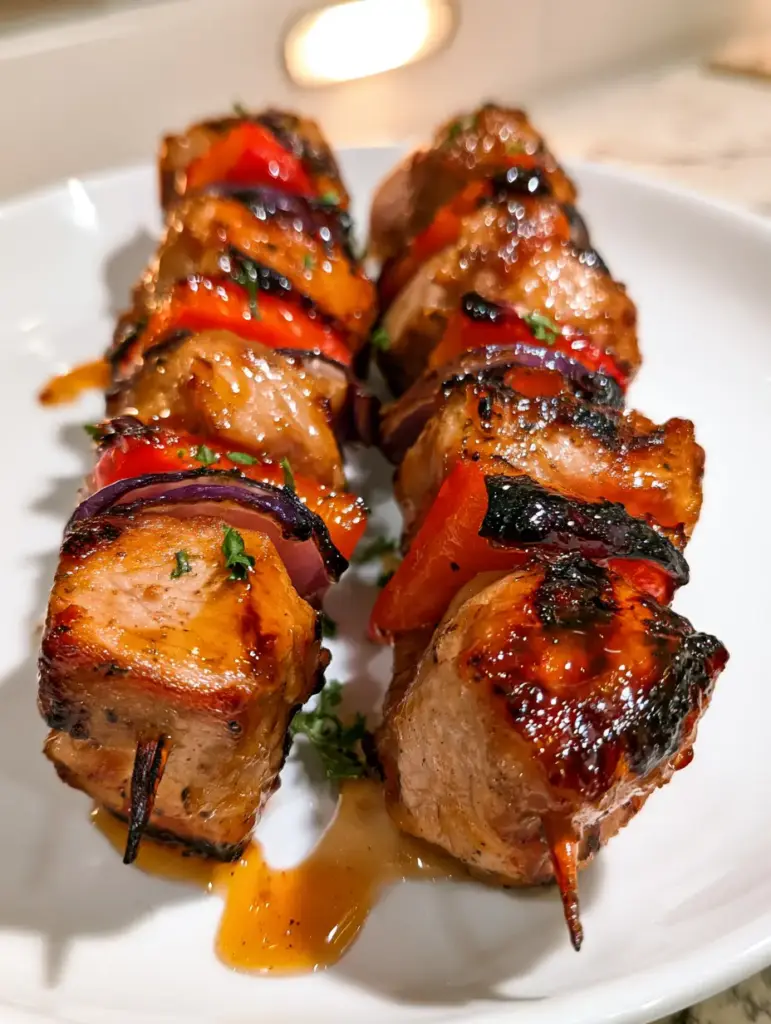
Place the skewers on the grill, listening for that immediate sizzle. Sear for 3-4 minutes per side, looking for the red bell peppers to become slightly blistered and the onion petals to develop charred edges.
Glazing for the Glistening Finish
While the meat sears, simmer the reserved marinade in the small saucepan over medium heat for 5 minutes until it thickens into a thick, translucent, glistening amber syrup. If it’s not thick enough, a tiny cornstarch slurry can be added.
During the last 2 minutes of grilling, generously brush the thick glaze over all sides of the pork. The sugars in the honey will rapidly caramelize, creating that signature “handheld smartphone photo” look with soft window light reflections.
Expert Tips for Grilling Success
- Don’t Crowd the Skewer: Leave a tiny bit of space between the pork and the peppers. If they are packed too tightly, the meat will steam instead of developing those crispy caramelized edges.
- The Carry-Over Cook: Remove the grilled pork kabobs from the heat when they reach 140°F (60°C). During the rest period, the temperature will rise to the food-safe 145°F (63°C) without drying out.
- Uniform Cutting: Ensure your pork cubes are all the same size (about 1.5 inches). This ensures every piece finishes cooking at the exact same time.
- Toasting the Seeds: For maximum flavor, toast your white sesame seeds in a dry pan for 2 minutes before dusting them over the finished dish.
The Best Sides to Pair with Your Kabobs
Choosing the right side dish can elevate these skewers from a simple snack to a full gourmet meal. Because of the sweet honey garlic profile, we recommend pairing them with something bright or creamy to balance the palate.
For a refreshing, cool contrast, a sweet watermelon and feta salad is an excellent choice. The saltiness of the feta complements the honey glaze perfectly. If you want something more substantial, a mediterranean chickpea salad offers a wonderful crunch that mimics the texture of the blistered peppers.
If you are hosting a traditional backyard barbecue, you can’t go wrong with a classic fresh corn salad. The charred kernels of corn echo the charred onion petals on the skewers, creating a cohesive smoky theme throughout the meal.
Storage, Reheating, and Meal Prep
Storage: Store any leftover kabobs in an airtight container in the refrigerator for up to 3 days. We recommend removing the meat and vegetables from the skewers before storing to save space.
Reheating: To maintain the juicy texture, reheat the pork in a skillet over medium heat with a splash of water or extra glaze. Avoid the microwave if possible, as it can turn the tenderloin rubbery.
Freezing: You can freeze the raw, marinated pork and vegetables in a freezer-safe bag for up to 2 months. Thaw completely in the refrigerator before skewering and grilling for a quick “future you” meal.
Frequently Asked Questions
Yes! You can broil them on high for about 5-7 minutes per side. Just be sure to watch them closely so the honey in the glaze doesn’t burn.
The key is to use an instant-read thermometer and pull the meat off the grill at 140-145°F (60-63°C). Overcooking is the primary cause of dry pork.
While you can, it’s often better to brush the glaze on the vegetables during the final stages of grilling. This prevents the vegetables from becoming too soft or soggy before they get a chance to char.
Pork tenderloin is the superior choice for kabobs because it is naturally lean and tender, allowing it to cook quickly on the grill without becoming tough or chewy.
You must simmer the glaze separately to reduce it into a thick syrup before brushing it on. If the glaze is too watery, it will simply run off into the grill rather than coating the meat.
The Ultimate Grilled Pork Kabobs Recipe
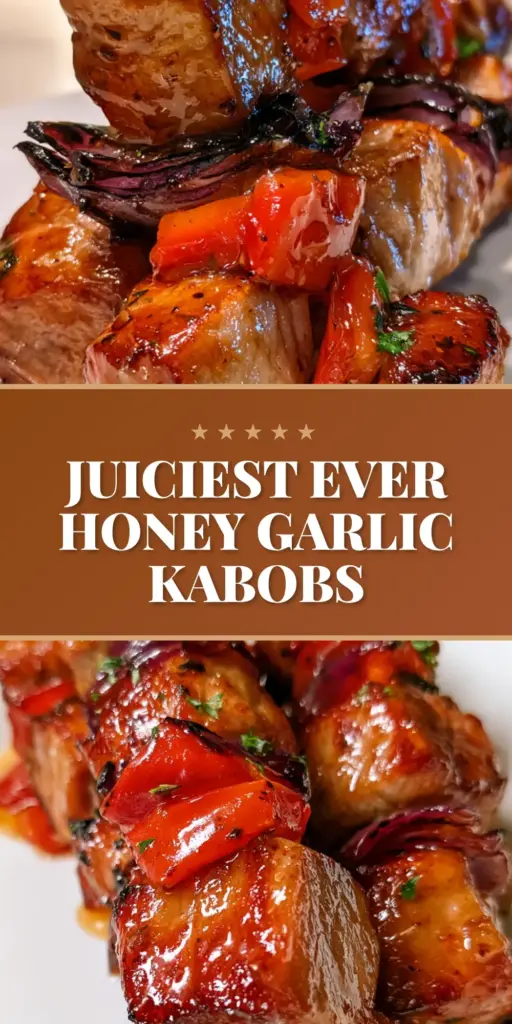
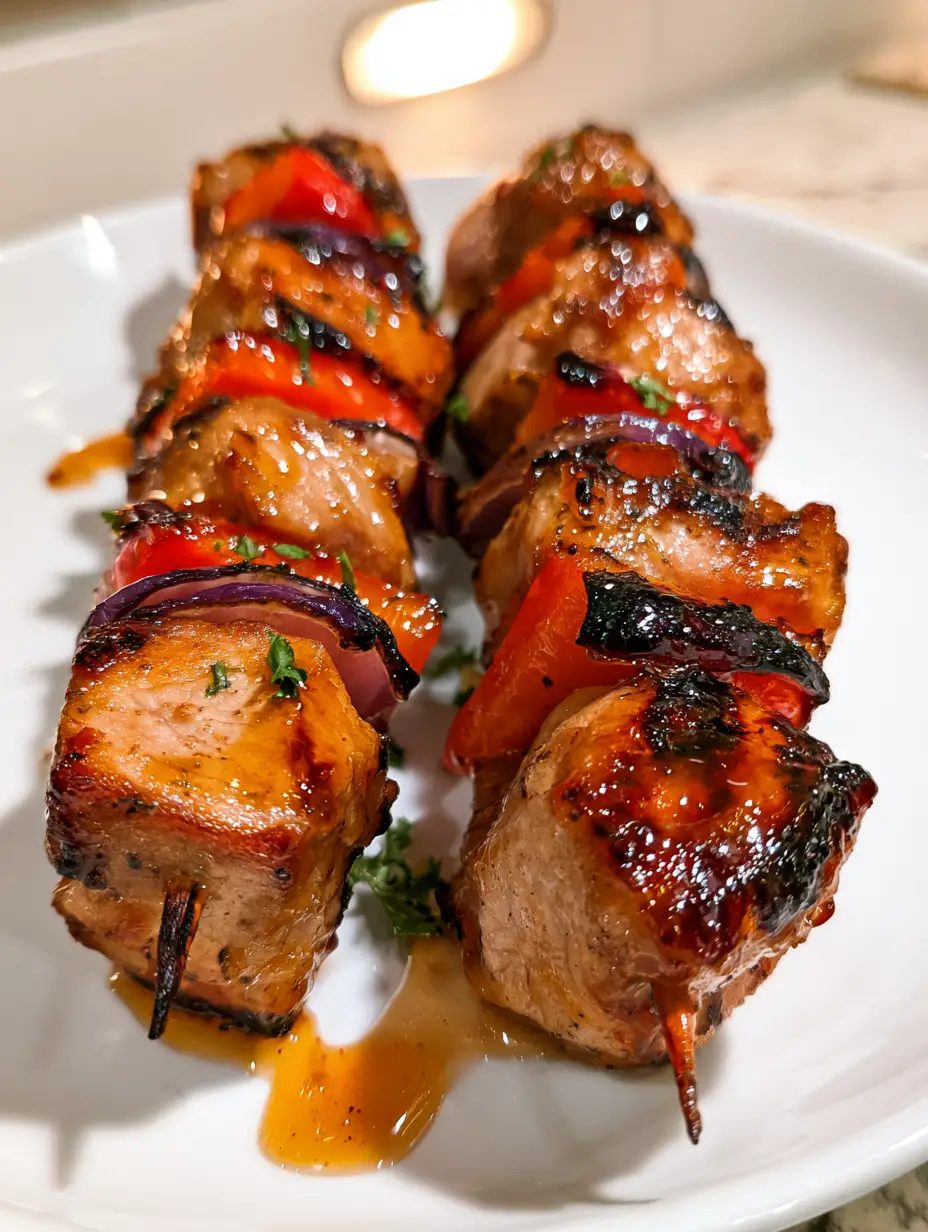
Grilled Pork Kabobs with Glistening Honey Garlic Glaze and Blistered Peppers
Ingredients
Equipment
Method
- Whisk honey, soy sauce, and garlic. Reserve half for later.
- Toss pork cubes in the remaining marinade for at least 30 minutes.
- Thread pork, peppers, and onion petals onto skewers, alternating pieces.
- Grill skewers over medium-high heat for 3-4 minutes per side until golden-brown sear marks appear.
- Simmer the reserved sauce in a pan until it becomes a thick, glistening amber syrup.
- Brush the thick glaze onto the skewers during the last 2 minutes of cooking.
- Remove from heat and top with sliced green onions and toasted sesame seeds.
Notes
Always use an instant-read thermometer to avoid overcooking the tenderloin.
Closing & Call to Action
These grilled pork kabobs are a testament to how simple ingredients, when treated with the right culinary techniques, can create something truly extraordinary. The combination of the thick, glistening amber glaze and the perfectly charred vegetables makes this a recipe you will return to all season long.
If you enjoyed this recipe, please leave a comment below and let us know how your sear turned out! Don’t forget to share your photos and save this recipe to your favorite boards on Pinterest so you can find it whenever the grilling craving strikes.