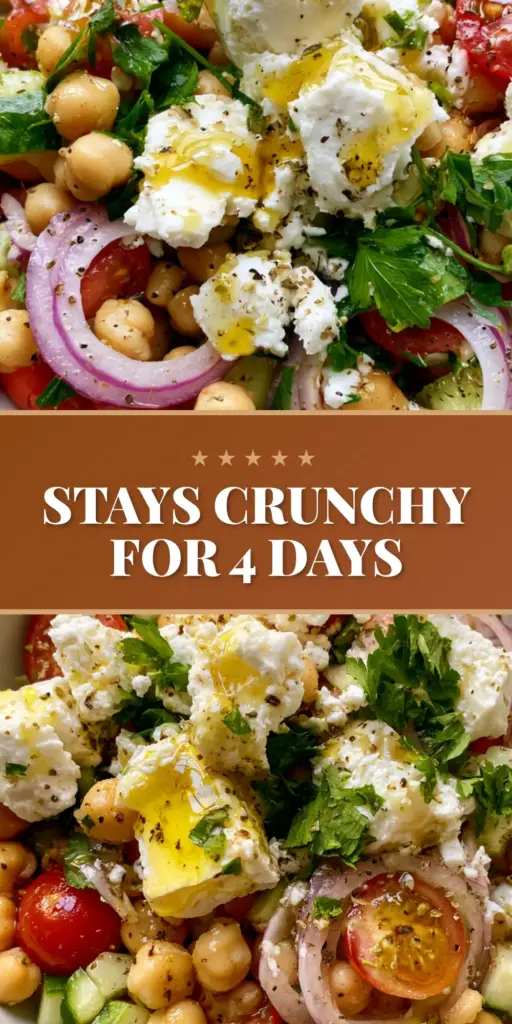
There is a specific kind of culinary magic that happens when crisp, garden-fresh vegetables meet the creamy, brined richness of authentic Mediterranean cheese. This cucumber chickpea feta salad is the embodiment of that harmony, offering a vibrant explosion of color and texture in every single bite. Imagine a matte white ceramic bowl filled with plump, golden chickpeas and precisely diced English cucumbers, all glistening under a translucent lemon herb dressing.
Whether you are looking for a high-protein lunch or a show-stopping side dish for your next gathering, this recipe delivers on every front. We have meticulously designed this dish to bridge the gap between a light summer refreshment and a satisfying, soul-warming meal. Every ingredient has been selected not just for flavor, but for the visual “pop” that makes a dish look as good as it tastes on a minimalist grey stone backdrop.
By following our professional culinary techniques, you will achieve that elusive balance of acidity, crunch, and creaminess. We aren’t just tossing vegetables in a bowl; we are building layers of flavor that develop as the salad sits, making it a perfect candidate for meal prep or a sun-drenched patio dinner.
Why This Mediterranean Chickpea Salad Wins Every Time
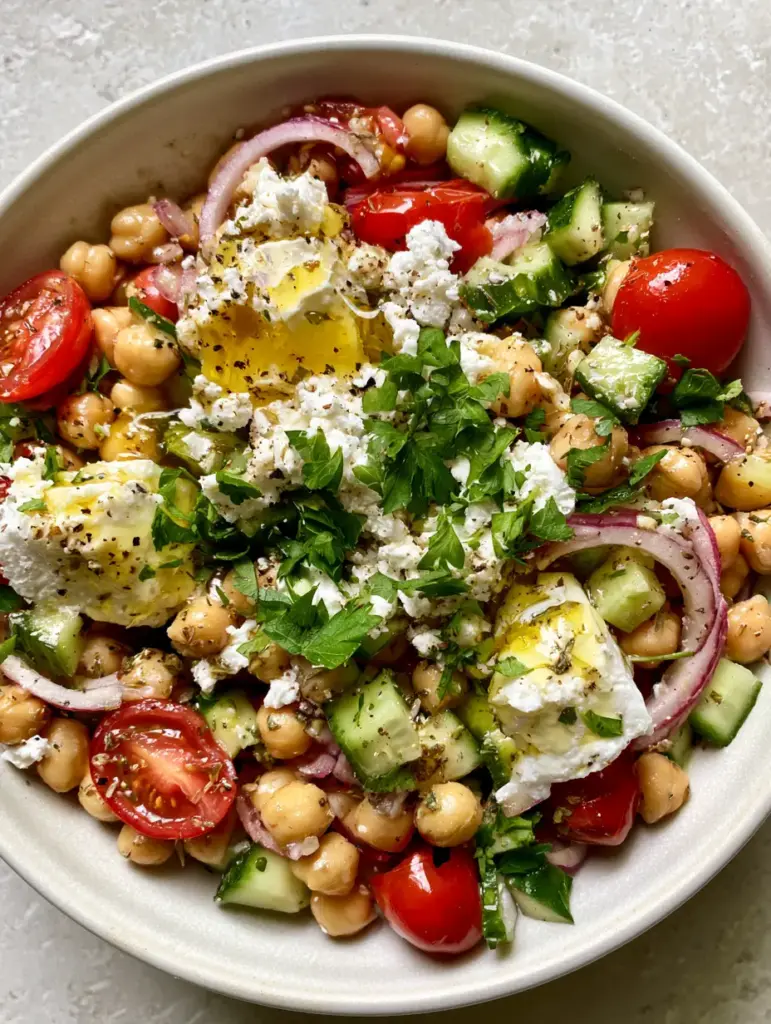
- Structural Integrity: Unlike leafy greens that wilt, the combination of plump chickpeas and English cucumber maintains its crunch for hours, even after being dressed.
- Visual Contrast: The bright red halved cherry tomatoes and the deep green parsley garnish create a professional-grade aesthetic that rivals any high-end bistro.
- Creamy-Salty Punch: Using large chunks of block feta cheese rather than pre-crumbled varieties ensures a superior mouthfeel and a cleaner, more intense flavor profile.
- Glossy Emulsification: Our golden-yellow lemon herb vinaigrette provides a translucent sheen that reflects light beautifully while clinging perfectly to every ingredient.
The Anatomy of the Perfect Cucumber Chickpea Feta Salad
To achieve the specific visual and textural results seen in our professional photography, you must start with the right components. Each element plays a functional role in the salad’s structural science.
Canned Chickpeas: 2 cans (15 oz / 425g each). These provide the golden, firm base of the salad; ensure they are rinsed and thoroughly dried so the dressing doesn’t become diluted.
English Cucumber: 1 large (approx. 300g). We use English cucumbers because they are seedless and have a thin, edible skin that adds a necessary snap and deep green color to the bowl.
Cherry Tomatoes: 1 pint (250g). Halving these bright red gems reveals their juicy interiors, adding essential moisture and a sweet-tart acidity to the mix.
Block Feta Cheese: 7 oz (200g). Avoid the pre-crumbled tubs; a block of brined feta allows you to create large, creamy white chunks that stand out against the darker vegetables.
Red Onion: 1/2 small onion (50g). Slicing these into thin, translucent rings provides a sharp bite and a beautiful purple hue that breaks up the greens and golds.
Fresh Flat-Leaf Parsley: 1/2 cup (15g), chopped. This isn’t just a garnish; the bright green herbaceous notes are critical for balancing the heavy olive oil in the dressing.
The Dressing Base: 1/3 cup (80ml) Extra Virgin Olive Oil and 3 tbsp (45ml) fresh lemon juice. This creates the “glossy, translucent” finish that defines a high-quality Mediterranean dressing.
Invisible Essentials: 1 tsp (1g) dried oregano, 1/2 tsp (3g) sea salt, and 1/2 tsp (1g) cracked black pepper. These seasonings are the “visual specks” that tell your guests the salad is perfectly seasoned.
Essential Kitchen Tools for Precision Results
To replicate the “precisely diced” look of our cucumber chickpea feta salad, your equipment matters as much as your ingredients. A sharp Chef’s knife is non-negotiable for clean cuts on the cucumber and onion.
You will also need a large matte white ceramic bowl to provide the high-contrast background for the vibrant vegetables. A small glass jar or a stainless steel whisk is required to properly emulsify the lemon herb vinaigrette, ensuring the oil and acid don’t separate on the plate.
Finally, ensure you have a fine-mesh colander. Rinsing the chickpeas is vital for removing the viscous “aquafaba,” but drying them on a clean kitchen towel is the secret step that allows the glossy dressing to actually stick to the legumes.
The Masterclass: How to Build the Salad
1. Preparing the Chickpea Foundation
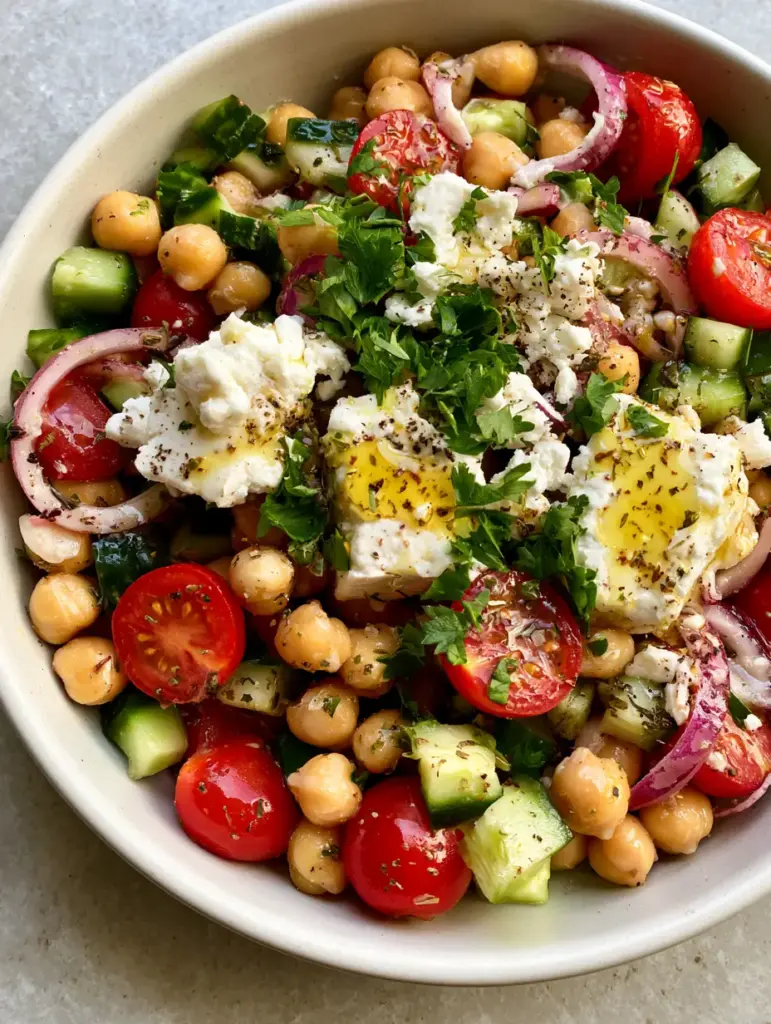
Open your cans and drain the chickpeas into a colander. Rinse them under cold running water until the foam disappears. Spread them out on a clean lint-free towel and pat them dry; if they are wet, the dressing will slide right off, and you’ll lose that “crisp and wet” look we are aiming for.
2. The Art of the Precision Vegetable Cut
Leave the skin on your English cucumber and dice it into uniform 1/2-inch (1.25cm) cubes. Slice the cherry tomatoes exactly in half lengthwise to showcase their seeds and interior structure. For the red onion, use a mandoline or a very sharp knife to create paper-thin rings that will soften slightly once they hit the acidic dressing.
3. Emulsifying the Translucent Vinaigrette
In a small bowl, whisk together the lemon juice, dried oregano, salt, and pepper. Slowly stream in the extra virgin olive oil while whisking vigorously. You are looking for a sensory cue: the liquid should transform from two separate layers into a singular, glossy, golden-yellow emulsion that looks heavy and rich.
4. Assembly and Texture Preservation
In your large white bowl, combine the chickpeas, cucumbers, tomatoes, and onions. Pour the heavy drizzle of vinaigrette over the top and toss gently. Only add the feta chunks and chopped parsley at the very end; this prevents the cheese from breaking down into a paste and keeps the parsley looking bright green and fresh.
Expert Tips for a Professional Finish
- The Temperature Factor: For the most “crisp” experience, chill your cucumber and tomatoes before dicing. A cold salad feels much more refreshing and holds its shape better under side-lighting.
- Feta Finesse: Instead of cubing the feta with a knife, crumble it by hand into irregular, large chunks. This creates more surface area for the dressing to cling to and looks more “rustic-chic.”
- The Oregano Bloom: Rub the dried oregano between your palms before adding it to the dressing. This releases the essential oils and ensures those “visible specks” are fragrant.
- Black Pepper Punch: Use a coarse grind for your black pepper. The larger cracked flakes provide a sophisticated visual contrast against the white feta.
Storage and Meal Prep Advice
The cucumber chickpea feta salad is incredibly resilient. It can be stored in an airtight container in the refrigerator for up to 4 days. In fact, many find that the flavors “marry” after about 2 hours of chilling.
If you are making this for a party, we recommend adding the parsley and the final crack of black pepper just before serving to maintain that “freshly chopped” appearance. Do not freeze this salad; the high water content of the cucumbers and tomatoes will cause them to turn mushy upon thawing.
What to Pair with Your Mediterranean Feast
This salad is a versatile powerhouse. It works beautifully as a standalone lunch, but it also shines when paired with other Mediterranean-inspired dishes. If you enjoy this flavor profile, you might want to try our chickpea feta avocado salad for a creamier twist.
For a themed summer spread, serve this alongside a watermelon feta salad to hit both savory and sweet notes. If you are a fan of varied textures, our Mediterranean feta salad collection offers several alternatives. Don’t forget to check out our broader list of cucumber salad recipes for more inspiration on using this crunchy vegetable.
Frequently Asked Questions
Yes, this salad holds up remarkably well. It can be made 2-4 hours in advance and chilled, which actually helps the chickpeas absorb the flavors of the vinaigrette.
Yes, you can use dried chickpeas. You will need to soak them overnight and boil them until tender but firm (about 1 to 1.5 hours) before using them in this salad.
Using an English cucumber is key because it has less water than standard varieties. Additionally, do not salt the cucumbers ahead of time; only add the dressing just before serving or storing to maintain crunch.
This recipe can be made vegan by substituting the feta cheese with a plant-based feta alternative or extra olives for that salty, brined kick.
Block feta is stored in brine, which keeps it creamier and more flavorful. Pre-crumbled feta is often treated with anti-caking agents that can dry out the cheese and affect the salad’s texture.
The Ultimate Cucumber Chickpea Feta Salad Recipe
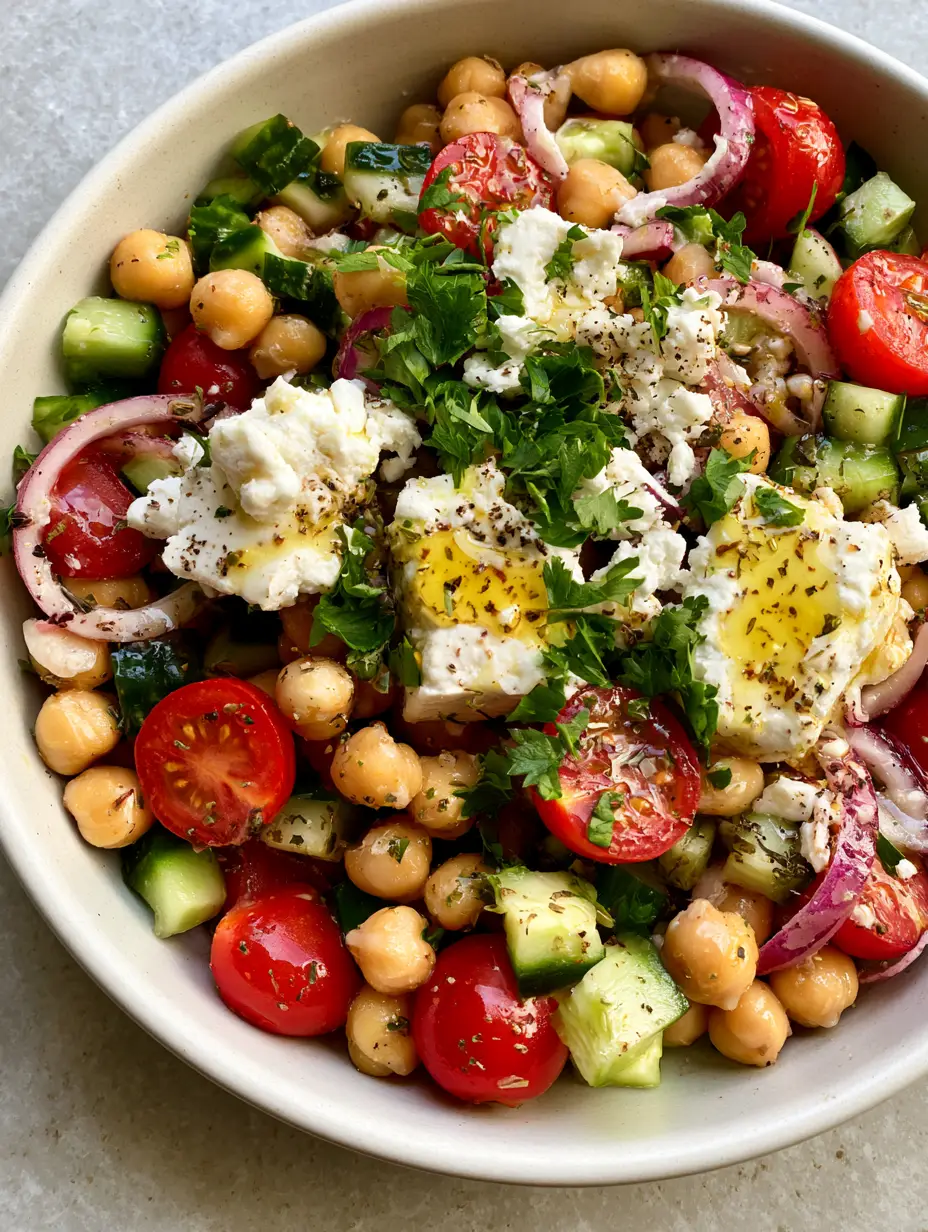
Cucumber Chickpea Feta Salad with Zesty Lemon Herb Vinaigrette
Ingredients
Equipment
Method
- Rinse the chickpeas in a colander until the water runs clear. Spread them on a clean towel and pat thoroughly dry to ensure the dressing adheres.
- Dice the English cucumber into 1/2-inch cubes. Halve the cherry tomatoes and thinly slice the red onion into rings.
- Whisk the lemon juice, dried oregano, salt, and pepper in a small jar. Slowly whisk in the olive oil until a glossy, translucent golden emulsion forms.
- In a large bowl, toss the chickpeas, cucumber, tomatoes, and onion with the dressing. Gently fold in the feta chunks and parsley to keep them intact.
Notes
Use a block of feta in brine for the best creamy texture and flavor.
Join the Culinary Community
We hope this cucumber chickpea feta salad becomes a staple in your kitchen. Its simplicity belies its deep, complex flavor and stunning visual appeal. If you made this recipe, please leave a comment below and let us know how it turned out!
Don’t forget to share your creations on social media and save this recipe to your boards on Pinterest so you always have it handy for your next meal prep session or summer cookout.