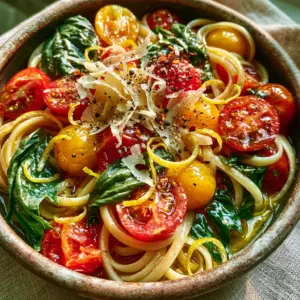
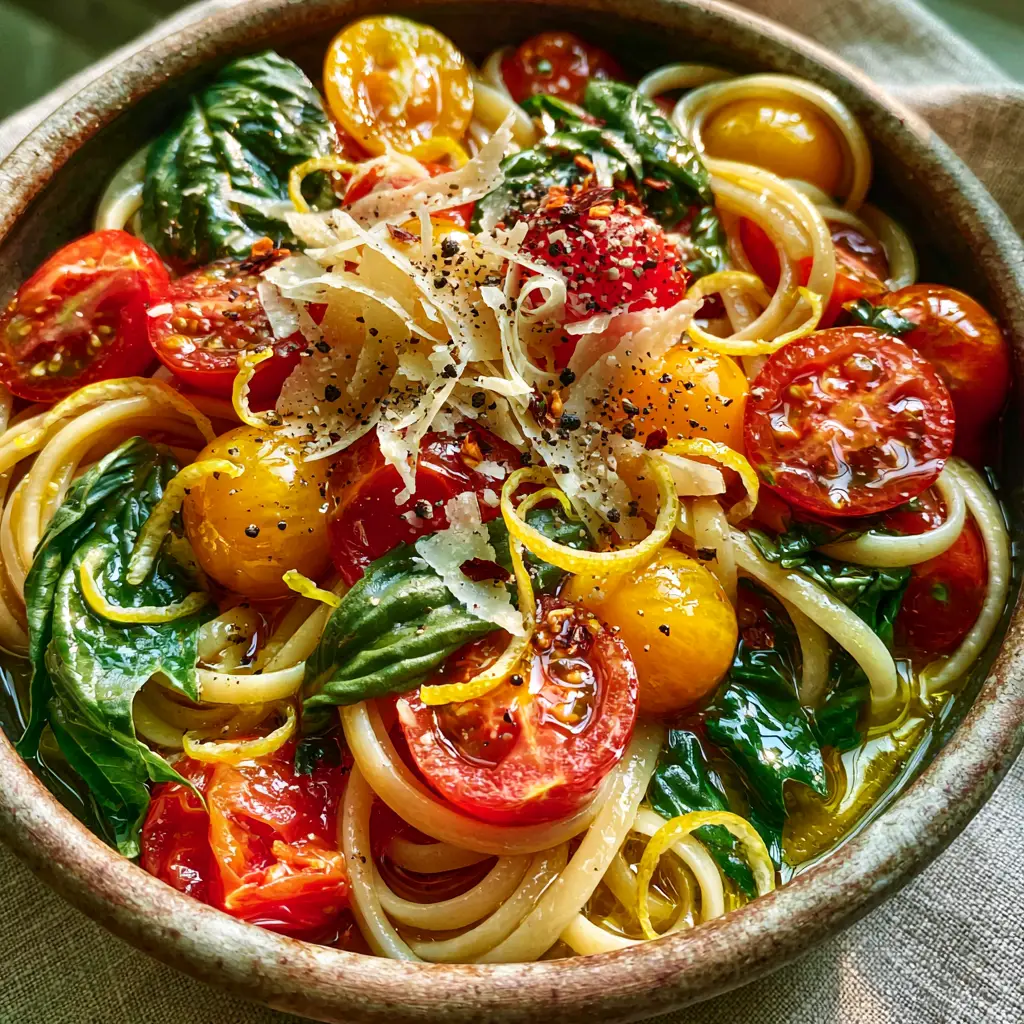
There is a specific kind of magic that happens when the late afternoon sun hits a bowl of Summer Garden Pasta. It is the culinary equivalent of a golden hour glow, where the simplest ingredients—ripe heirloom tomatoes, fragrant basil, and a slick of liquid gold olive oil—transform into a masterpiece. This isn’t just a meal; it’s a celebration of peak harvest season captured in a rustic ceramic bowl.
When the heat of July and August makes the thought of a heavy sauce unbearable, this recipe steps in with its vibrant, translucent, and emulsified golden sauce. Unlike traditional pasta dishes that spend hours simmering on a stovetop, this Summer Garden Pasta relies on the natural juices of raw tomatoes. The heat from the al dente linguine gently warms the ingredients, creating a sauce that is both light and incredibly complex.
Imagine sitting by a sun-drenched window, a cool breeze fluttering the linen curtains, while you twirl strands of pasta glistening with tomato essence. Every bite offers a pop of juicy acidity from the halved cherry tomatoes, a hit of citrus from fresh lemon zest, and the peppery finish of hand-torn basil. This is high-definition flavor that feels authentic, unrehearsed, and absolutely unforgettable.
Why You Will Crave This Raw Tomato Linguine
- Zero-Cook Sauce: The sauce creates itself using the residual heat of the pasta and the natural juices of the fruit, preserving the “just-picked” flavor of your garden.
- Textural Contrast: You get the firm snap of al dente linguine against the soft, yielding texture of halved red and yellow heirloom tomatoes.
- Visual Brilliance: With bright green basil, sunny yellow tomatoes, and deep red accents, this dish is a feast for the eyes before it ever hits your tongue.
- Pantry Staple Hero: Aside from the fresh produce, this recipe uses basic kitchen essentials like high-quality olive oil and cracked black pepper to achieve gourmet results.
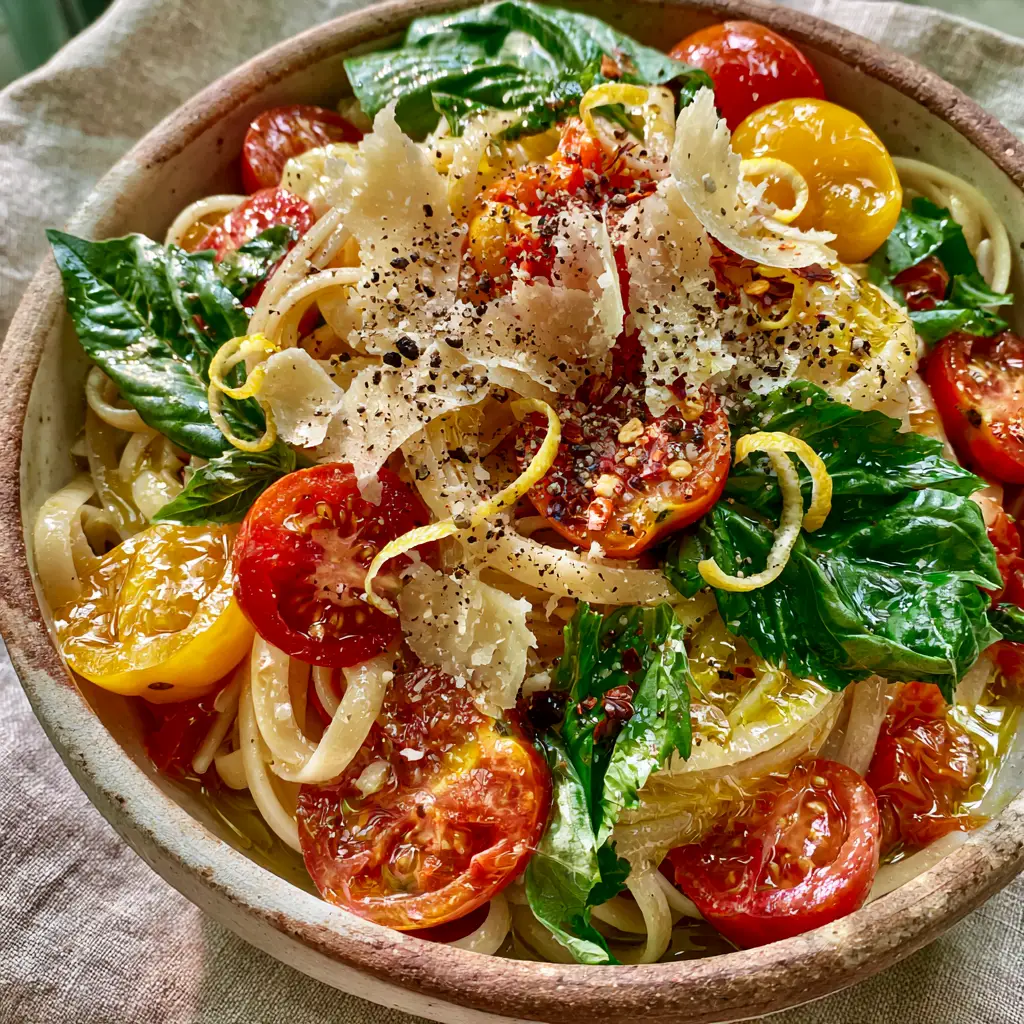
The Blueprint: Essential Ingredients for Summer Garden Pasta
To achieve the specific visual and flavor profile of this Summer Garden Pasta, we must focus on the quality of the raw components. Since we aren’t masking anything with long cooking times, each ingredient must be at its absolute peak.
1 lb (454g) Linguine: We use linguine for its flat, narrow surface area, which is ideal for catching the emulsified olive oil and tomato juice sauce. Its structure holds up beautifully to the weight of the halved tomatoes.
2 cups (300g) Red and Yellow Cherry Tomatoes: A mix of colors isn’t just for aesthetics; yellow tomatoes often provide a milder, sweeter counterpoint to the acidic punch of the red varieties. Halving them allows their internal juices to escape and form the base of our sauce.
1/2 cup (120ml) Extra Virgin Olive Oil: This is the “liquid gold” that emulsifies with the tomato juices. Use a high-quality, cold-pressed oil with grassy notes to complement the fresh basil.
1 cup (30g) Fresh Basil Leaves: Large, rustic tears of bright green basil provide a peppery, aromatic depth that dried herbs simply cannot replicate. Tearing the leaves by hand prevents the edges from bruising and darkening.
2 tsp (4g) Fresh Lemon Zest: Thin curls or strips of zest add a high-frequency citrus note that cuts through the richness of the olive oil. It provides a bright, shimmery finish to the overall flavor profile.
1/2 cup (50g) Aged Parmesan Cheese: Shaved into delicate, translucent curls, this cheese provides the necessary salt and umami to balance the sweetness of the fruit. Avoid pre-grated varieties for the best visual impact.
Foundational Seasonings: We use 1 tsp (2g) cracked black pepper for a sharp bite and 1/2 tsp (1g) dried red chili flakes for a subtle, lingering heat. Don’t forget 2 tbsp (36g) of kosher salt for the pasta water—it is your only chance to season the pasta itself.
The Science of the Emulsified Tomato Sauce
The secret to the Summer Garden Pasta is the emulsion. An emulsion is the process of combining two liquids that ordinarily don’t mix—in this case, fats (olive oil) and water-based liquids (tomato juice and a splash of pasta water).
By tossing the piping hot linguine directly into the bowl with the raw tomatoes and oil, the starches on the surface of the pasta act as a bridge. As you vigorously toss the mixture, the oil breaks into tiny droplets that become suspended in the tomato juice, creating that vibrant, translucent shimmer you see in the photos.
This technique ensures that the sauce clings to every strand of linguine rather than simply pooling at the bottom of the bowl. It creates a mouthfeel that is luxurious and silken without the need for heavy cream or butter. To further enhance this, you might pair the meal with homemade crusty bread (coming soon) to soak up every last drop of that golden sauce.
Step-by-Step Instructions for the Perfect Bowl
1. Macerate the Tomatoes
In a large, shallow rustic ceramic bowl, combine your halved red and yellow cherry tomatoes with the extra virgin olive oil, cracked black pepper, and red chili flakes. Sprinkle with a pinch of salt. Let this sit for at least 20 minutes while you prepare the pasta.
Visual Cue: You will notice the tomatoes beginning to release their clear, vibrant juices, mingling with the oil to create a thin, flavorful marinade.
2. Achieve the Perfect Al Dente
Bring a large pot of water to a rolling boil and add the kosher salt. Submerge the linguine and cook for approximately 8-9 minutes. Start tasting the pasta 2 minutes before the package directions suggest.
Sensory Cue: The pasta should have a “toothsome” bite—firm in the center without being crunchy. This structural integrity is vital so the linguine doesn’t turn mushy when tossed with the sauce.
3. The Emulsion Toss
Using tongs, transfer the linguine directly from the boiling water into the bowl with the tomatoes. Do not drain the pasta in a colander; the small amount of starchy water clinging to the strands is essential for the sauce.
Vigorously toss the pasta with the tomatoes and oil for 60 seconds. You will see the liquid transform from a clear oil into a shimmering, slightly thickened golden sauce that coats the linguine perfectly.
4. The Final Flourish
Add the large rustic tears of fresh basil and the thin curls of lemon zest. Toss once more just to distribute. The residual heat will wilt the basil slightly, releasing its essential oils without losing its bright green color.
Top the dish with generous shavings of aged parmesan cheese. The cheese should sit on top of the pasta, slowly softening but not completely melting, providing a beautiful textural contrast to the glistening noodles.
Expert Tips for Success
- Room Temperature is Key: Never use refrigerated tomatoes. Cold temperatures break down the cellular structure of tomatoes, making them mealy. Keep your heirlooms on the counter for the best juice release.
- The “Starchy Gold”: If the sauce looks too thin or oily, add 2-3 tbsp (30-45ml) of the hot pasta cooking water. The starch acts as a natural thickener.
- Tear, Don’t Chop: Use your hands to tear the basil. A knife can oxidize the leaves, turning the edges black. Rustic tears look more authentic and maintain the herb’s integrity.
- Zest Wisely: Use a vegetable peeler to get wide strips of lemon zest, then slice them into thin curls. This provides a more intense burst of citrus than a fine grater.
Storage, Reheating, and Make-Ahead Advice
The Summer Garden Pasta is best enjoyed immediately while the tomatoes are fresh and the emulsion is stable. However, leftovers can be stored in an airtight container in the refrigerator for up to 2 days.
To reheat, do not use the microwave, as it will break the emulsion and make the oil separate. Instead, place the pasta in a skillet over low heat with a splash of water or a drizzle of fresh olive oil. Toss gently until just warmed through.
We do not recommend freezing this dish. The fresh tomatoes and basil will lose their texture and vibrancy upon thawing, resulting in a dull, unappealing meal.
What to Serve with Your Summer Garden Pasta
This pasta is a star on its own, but it pairs beautifully with light, Mediterranean-inspired sides. Consider serving it alongside a lemon herb roasted chicken (coming soon) for a boost of protein that mirrors the citrus notes in the linguine.
For a vegetarian feast, a grilled peach and arugula salad (coming soon) adds a smoky sweetness that complements the acidity of the cherry tomatoes. If you are looking for something more substantial, a side of seared garlic butter shrimp (coming soon) can be tossed right into the bowl for an elegant seafood twist.
Frequently Asked Questions
This recipe is best served immediately. However, you can macerate the tomatoes in olive oil up to 2 hours in advance. Only add the hot pasta when you are ready to eat.
Yes, while linguine is preferred for its surface area, spaghetti or fettuccine work well. Short shapes like fusilli or farfalle can also be used, though the emulsion clings best to long strands.
No! The magic of Summer Garden Pasta is the raw sauce. The hot pasta gently warms the tomatoes, but they remain fresh and juicy rather than breaking down into a cooked mush.
Choose a high-quality Extra Virgin Olive Oil (EVOO). Look for labels that mention ‘cold-pressed’ and have a harvest date within the last year for the most vibrant flavor.
If the sauce is watery, you may need to toss the pasta more vigorously. The mechanical action of tossing creates the emulsion between the oil, tomato juice, and pasta starch.
The Ultimate Summer Garden Pasta Recipe
Summer Garden Pasta with Fresh Cherry Tomatoes and Basil
Ingredients
Equipment
Method
- In a large ceramic bowl, combine halved tomatoes, olive oil, cracked pepper, and chili flakes. Let sit for 20 minutes to release juices.
- Cook linguine in salted boiling water until al dente. Do not drain.
- Use tongs to transfer hot pasta directly into the tomato bowl. Toss vigorously for 60 seconds to create the emulsified sauce.
- Fold in torn basil and lemon zest. Top with shaved parmesan and serve immediately.
Notes
Save a little pasta water to loosen the sauce if needed.
Embrace the Flavors of the Season
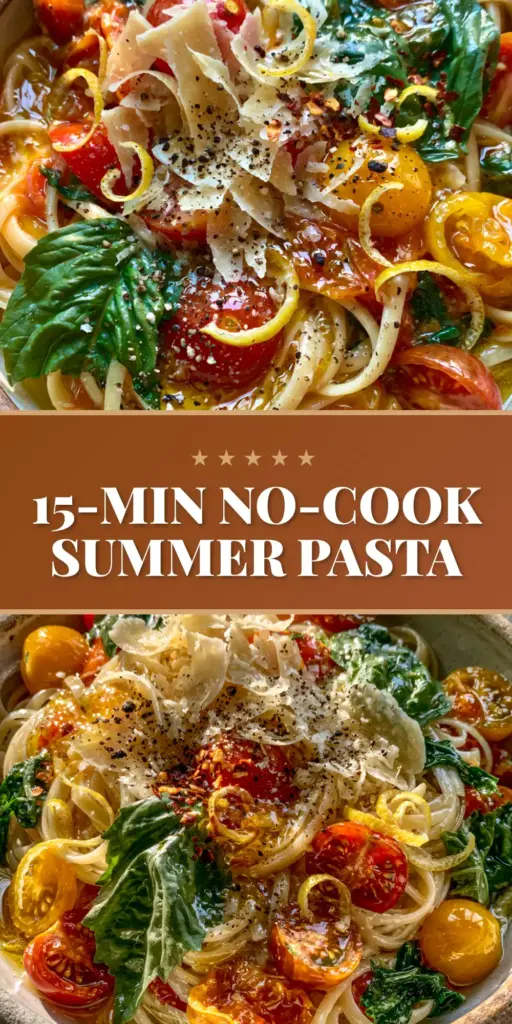
This Summer Garden Pasta is more than just a quick dinner; it is a reminder of why we cook with the seasons. It requires no complex gadgets—just a bowl, a pot, and the best produce you can find. The result is a dish that shimmers with health, vitality, and incredible flavor.
If you enjoyed this journey into the flavors of summer, please leave a comment below and let us know how your emulsion turned out! Don’t forget to share your creations and pin this recipe to your favorite boards on Pinterest so you can find it every time the tomatoes start ripening on the vine.
Looking for more inspiration? Explore our collection of 30-minute pasta dinners (coming soon) for those busy weeknights when you still want to eat like a gourmand.