When the golden hour light hits a platter of fresh watermelon canapes, the result is nothing short of culinary art. These bite-sized appetizers are the quintessential marriage of summer’s sweetest bounty and the savory, salty depth of high-quality Mediterranean cheese. They are designed for the home cook who appreciates the “smartphone-photo-ready” aesthetic without sacrificing professional-grade flavor profiles.
Imagine the crunch of chilled, ruby-red watermelon followed by the velvety richness of sheep’s milk feta, all tied together by a sharp, glossy balsamic reduction. This isn’t just a snack; it is a masterclass in texture and temperature contrast. Whether you are hosting a garden party or looking for a sophisticated starter, these watermelon canapes provide a refreshing explosion of flavor that captures the very essence of summer entertaining.
The Anatomy of a High-End Summer Appetizer
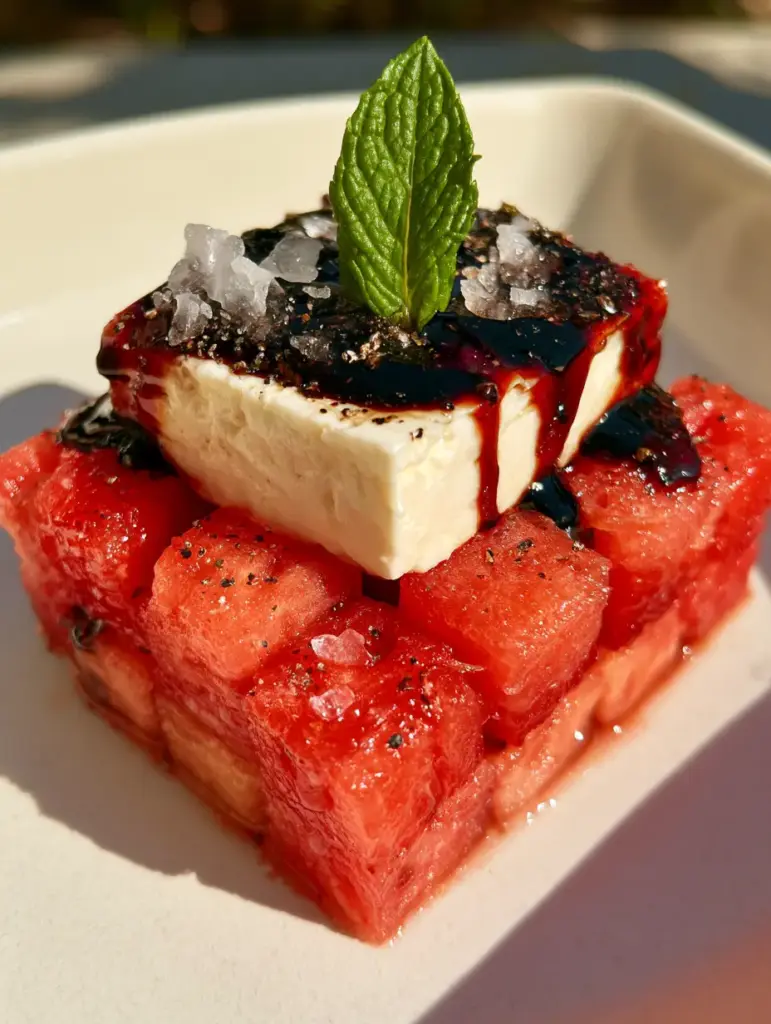
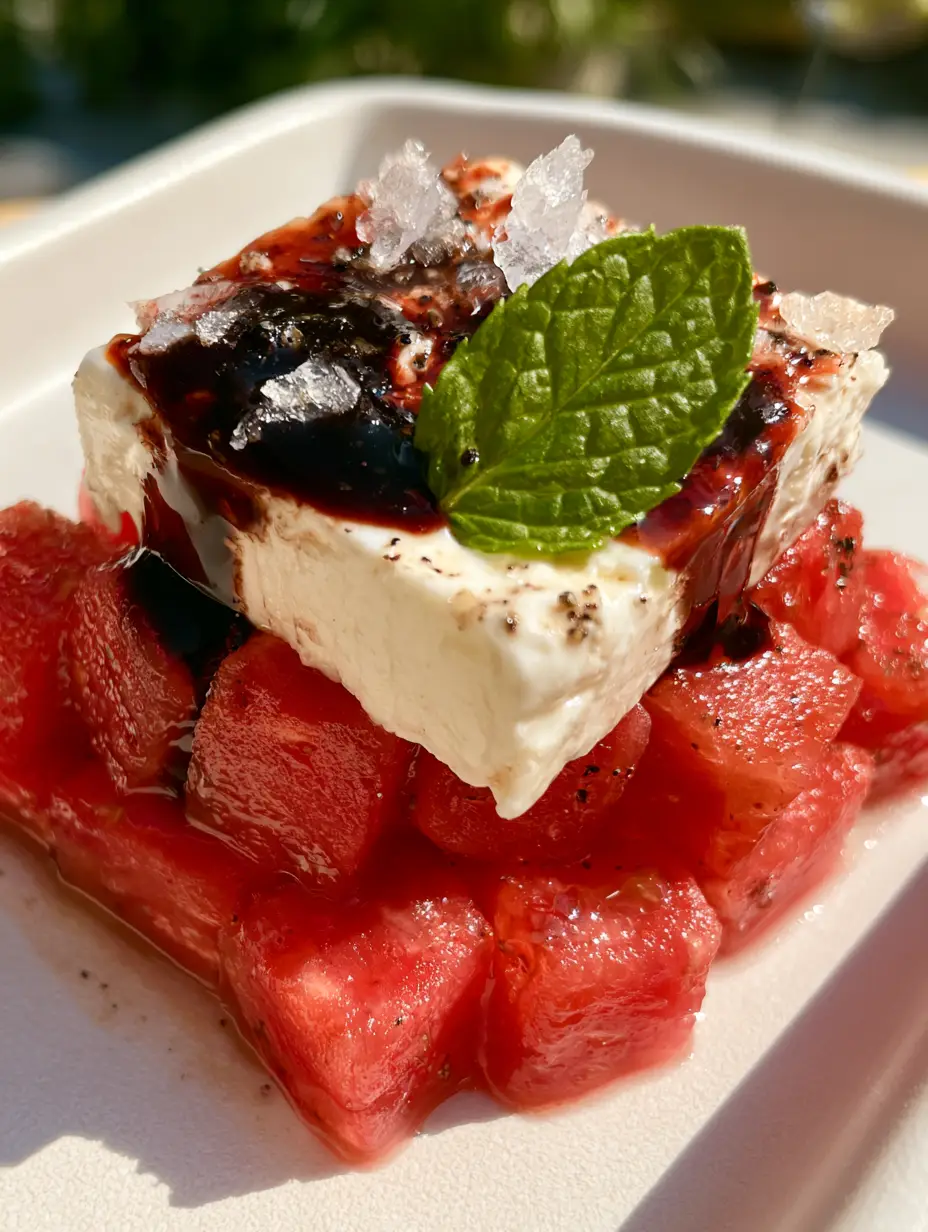
What makes these watermelon canapes stand out from a standard fruit salad is the deliberate attention to structural integrity and sensory layering. Every element is chosen to provide a specific visual and tactile response, ensuring that each bite is as satisfying to look at as it is to eat.
- Structural Crunch: Precision-cut watermelon cubes provide a sturdy, juicy base with visible cellular texture.
- Creamy Contrast: Thick-cut feta blocks offer a dense, salty counterpoint to the high water content of the fruit.
- Viscous Finish: A dark mahogany balsamic glaze adds a concentrated tang and a professional, glossy sheen.
- Aromatic Herbaceousness: Fresh mint leaves are pressed into the cheese, releasing essential oils with every bite.
- Crystalline Texture: Large Maldon sea salt flakes provide a delicate “pop” that enhances the natural sweetness of the melon.
The Essential Elements for Ruby-Red Perfection
Achieving the look of a gourmet food blog requires starting with the right building blocks. For these watermelon canapes, the quality of your fruit and the origin of your cheese are the two most critical factors in the final result.
1 Small Seedless Watermelon (approx. 3kg): Look for a melon that feels heavy for its size and has a dull skin, indicating it is fully ripe and bursting with juice. A vibrant yellow field spot is a hallmark of a melon that has spent enough time on the vine to develop peak sugar levels.
7 oz (200g) Block Feta Cheese: For the most authentic flavor, opt for sheep’s milk feta stored in brine. It has a creamier, more complex profile than cow’s milk varieties and holds its shape perfectly when sliced into precise squares.
1/2 cup (120ml) Balsamic Vinegar: This will be reduced down into a heavy, viscous glaze. Using a high-quality vinegar from Modena ensures a deep mahogany color and a syrupy consistency without the need for thickeners.
1 bunch Fresh Mint: Choose bright emerald green leaves without any wilting or dark spots. The mint should be aromatic and sturdy enough to be pressed into the cheese without bruising instantly.
1 tbsp (15g) Maldon Sea Salt: These translucent, pyramid-shaped flakes are essential for that high-end finish. They provide a clean saltiness that doesn’t overwhelm the delicate fruit.
1 tsp (5g) Freshly Cracked Black Pepper: Coarse-ground pepper adds a subtle heat that cuts through the richness of the feta and the sweetness of the balsamic reduction.
Precision Tools for Gourmet Presentation
To achieve the “precision-cut” look described in our visual blueprint, you will need a few specific kitchen tools. These ensure uniformity, which is the secret to making home-cooked food look like it came from a professional catering kitchen.
A sharp Chef’s knife is non-negotiable for cutting the watermelon into clean-edged cubes. Avoid serrated blades, which can tear the delicate cellular structure of the fruit. A small offset spatula can be incredibly helpful for placing the feta squares onto the melon without leaving fingerprints on the cheese.
For the glaze, a small heavy-bottomed saucepan is required to ensure even heat distribution. This prevents the sugars in the balsamic vinegar from scorching. Finally, a matte white ceramic serving tray provides the perfect neutral backdrop, allowing the ruby reds and emerald greens of the watermelon canapes to pop under natural light.
Developing the Rich Balsamic Mahogany Glaze
The “heavy, viscous, glossy dark mahogany” glaze seen in our prompt is achieved through a slow reduction process. This concentrates the sugars and acidity, transforming a thin liquid into a gourmet syrup.
Simmering to Syrupy Perfection
Pour your 1/2 cup (120ml) of balsamic vinegar into your saucepan over medium heat. Bring it to a gentle simmer, then immediately reduce the heat to low. You want to see small bubbles around the edges, but never a rolling boil.
Allow the vinegar to reduce by half, which usually takes about 10-12 minutes. The “Visual Cue” here is the “coat the back of a spoon” test. When the liquid leaves a thick, dark trail on a metal spoon, it is ready. Remember, the glaze will continue to thicken significantly as it cools.
The Cooling Phase
Transfer the reduction to a small glass bowl and let it come to room temperature. This is vital; if you drizzle hot glaze onto cold watermelon, it will run off and melt the cheese. A properly cooled glaze should have the consistency of warm honey.
Architecture of the Perfect Bite: Step-by-Step
Assembling watermelon canapes is a task of precision. Each layer must be centered to maintain balance and aesthetic appeal. Follow these steps to replicate the handheld smartphone photo aesthetic perfectly.
Precision Slicing the Base
Start by removing the rind from your chilled watermelon. Slice the flesh into 1-inch (2.5cm) thick rounds. From these rounds, cut uniform cubes. Aim for squares that are approximately 1.5 inches (4cm) on all sides.
Place the cubes on a paper towel-lined tray for 5 minutes. This absorbs excess moisture, ensuring the feta doesn’t “slide” off the top. You want the cubes to show those beautiful cellular textures and light condensation beads that signify they are perfectly chilled.
Layering the Feta and Mint
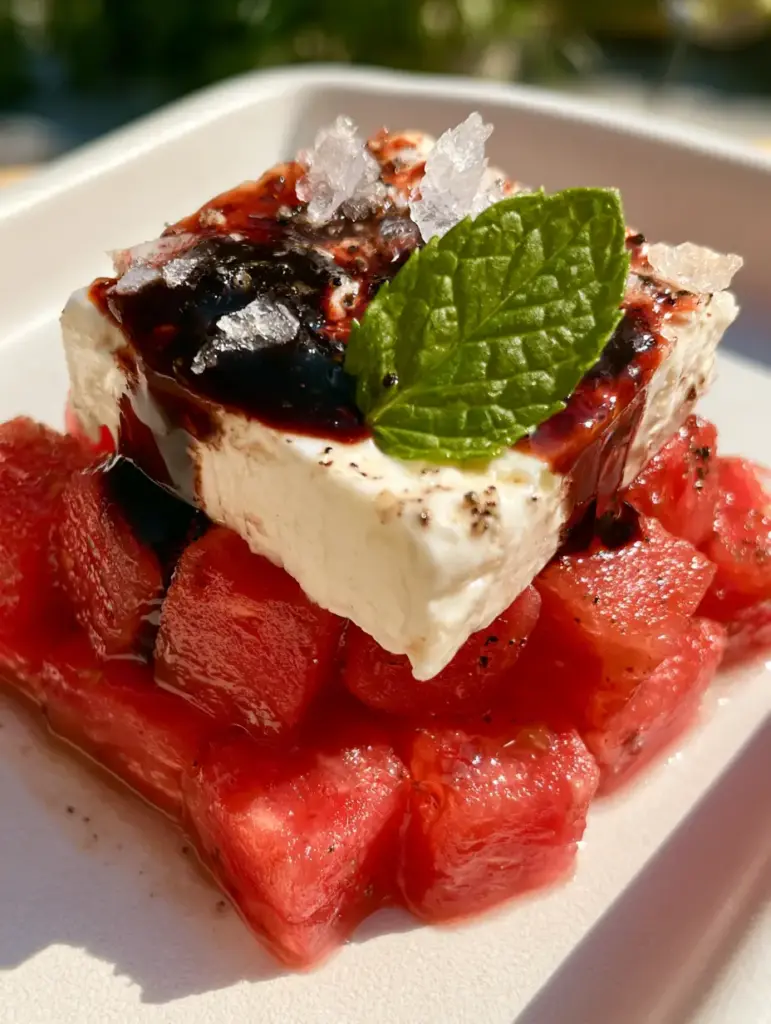
Slice your block of sheep’s milk feta into squares that are slightly smaller than your watermelon cubes (about 1 inch or 2.5cm). They should be roughly 1/4 inch (0.6cm) thick. Carefully center one square of feta on each watermelon cube.
Select the smallest, most vibrant mint leaves from your bunch. Place one leaf in the center of the feta. Use your thumb to gently press the leaf into the cheese. This “anchors” the herb and ensures it stays in place during service while releasing a burst of fragrance.
The Final Artistic Drizzle
Using a small spoon or a squeeze bottle, create an artistic drizzle of the mahogany balsamic glaze over the top. Start from one corner and move diagonally. The glaze should be thick enough to sit on top of the cheese rather than soaking in immediately.
Finish with a precise sprinkle of Maldon sea salt and a touch of cracked black pepper. The salt should catch the light, appearing like tiny translucent diamonds against the dark glaze. Serve immediately on a matte white tray to capture that golden hour glow.
Expert Tips for Success
- The Temperature Rule: Always keep your watermelon in the refrigerator until the very second you are ready to slice. The “condensation beads” in the visual prompt only occur when the cold fruit meets the warm air.
- Feta Selection: If you find the feta too crumbly to slice into squares, dip your knife in warm water between each cut. This creates a cleaner edge.
- Glaze Consistency: If your balsamic reduction becomes too thick (like candy), simply whisk in 1 teaspoon (5ml) of water at a time until the desired viscosity is restored.
- Herbal Freshness: Do not chop the mint. Using whole leaves prevents the edges from browning and maintains the high-end, “gourmet” look.
Maintaining the Crisp: Storage and Preparation Secrets
While watermelon canapes are best enjoyed fresh, you can prep the components in advance. The balsamic glaze can be made up to two weeks ahead and stored in an airtight container at room temperature.
The watermelon can be cubed 4-6 hours in advance, but it must be stored in a single layer on paper towels in the fridge to prevent it from sitting in its own juice. We do not recommend assembling these more than 30 minutes before serving, as the salt will eventually draw moisture out of the melon, making the dish soggy.
Because of the high water content, these do not freeze well. Any leftovers can be chopped up and tossed into a refreshing watermelon feta salad for lunch the next day.
What to Serve With This
These watermelon canapes are the perfect opening act for a light Mediterranean-themed lunch or a backyard BBQ. If you are looking for more vibrant, vegetable-forward sides, consider serving them alongside a chickpea cucumber feta salad or a zesty Mediterranean feta salad.
For a festive summer spread, they pair beautifully with other seasonal favorites like a fresh corn salad or no-bake Fourth of July desserts. The sweetness of the melon also acts as a great palate cleanser if you are serving heavier items like grilled meats or pasta salads.
Common Curiosities Regarding Fruit Hors d’Oeuvres
It is best to assemble them no more than 30 minutes before serving. However, you can prep the watermelon cubes and feta squares ahead of time and store them separately.
Yes, you can use a high-quality store-bought reduction, but ensure it is thick and viscous so it doesn’t run off the sides of the feta.
Chilling the watermelon to about 38°F (3°C) and bringing it out into room temperature creates natural condensation on the fruit’s surface for that fresh look.
The key is to pat the watermelon cubes dry with paper towels before assembly and wait to add the sea salt until the very last second, as salt draws out moisture.
Sheep’s milk feta in brine is best. It is creamier and holds its square shape much better than the drier, crumbly cow’s milk varieties.
The Ultimate Watermelon Canapes Recipe
Watermelon Canapes with Creamy Feta and Mahogany Balsamic Glaze
Ingredients
Equipment
Method
- Place 1/2 cup (120ml) balsamic vinegar in a small saucepan over medium heat. Bring to a simmer, then reduce heat to low.
- Cook for 10-12 minutes until the liquid is reduced by half and coats the back of a spoon with a dark mahogany sheen. Let cool to room temperature.
- Cut the chilled watermelon into 1.5-inch (4cm) uniform cubes. Pat dry with paper towels to ensure the feta stays in place.
- Top each cube with a 1-inch square of feta. Press a single fresh mint leaf into the center of the cheese to anchor it.
- Drizzle the viscous balsamic glaze over the top. Garnish with Maldon sea salt flakes and freshly cracked black pepper.
Notes
Use a squeeze bottle for more control when drizzling the glaze.
Bringing the Garden Party to Your Table
The beauty of these watermelon canapes lies in their simplicity and the high-contrast colors of the ingredients. By focusing on precision cuts and the slow reduction of your balsamic vinegar, you transform humble ingredients into a five-star appetizer. The next time you see that perfect golden hour light, bring out a tray of these and watch your guests reach for their phones before they reach for a bite.
Did you enjoy this recipe? We’d love to hear your thoughts! Leave a comment below, and don’t forget to sign up for our newsletter for more gourmet home-cooking tips. If you loved the look of these, be sure to share this recipe to Pinterest!