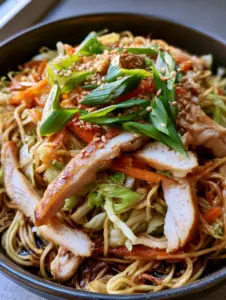
Chicken Chow Mein is the ultimate comfort food that bridges the gap between a quick weeknight dinner and a gourmet culinary experience. If you have been searching for that perfect balance of charred wheat noodles, tender protein, and a glossy soy-based sauce, you have arrived at the right place. This recipe is designed to replicate the specific “wok hei” or “breath of the wok” flavor that makes restaurant-style stir-fry so addictive.
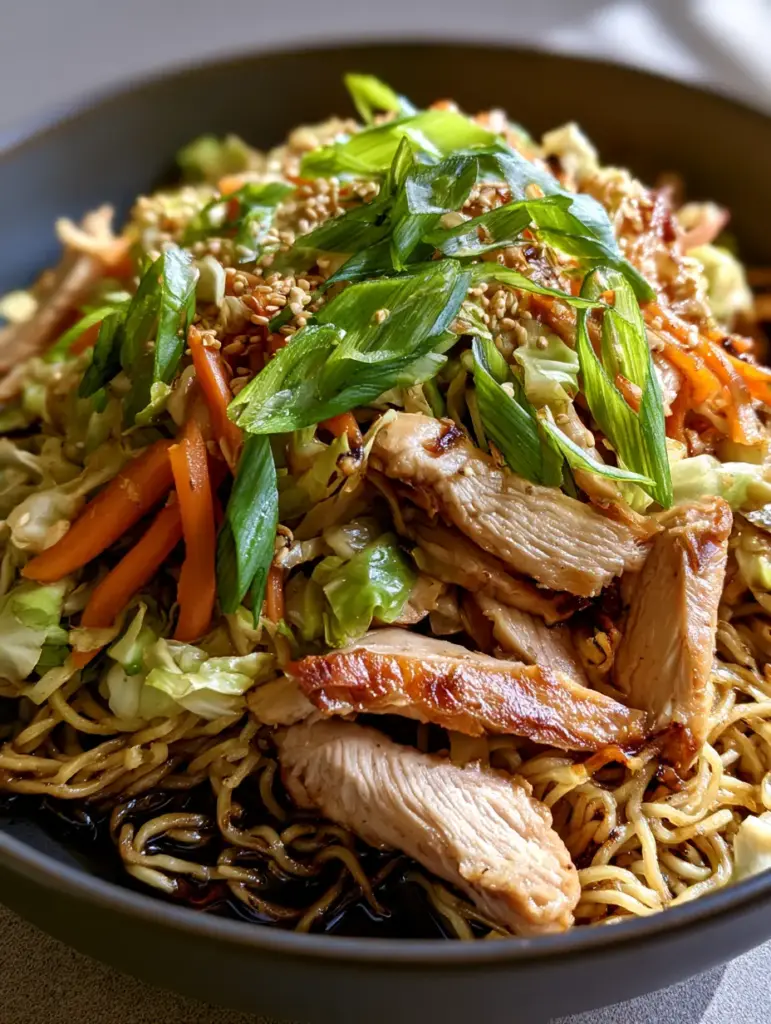
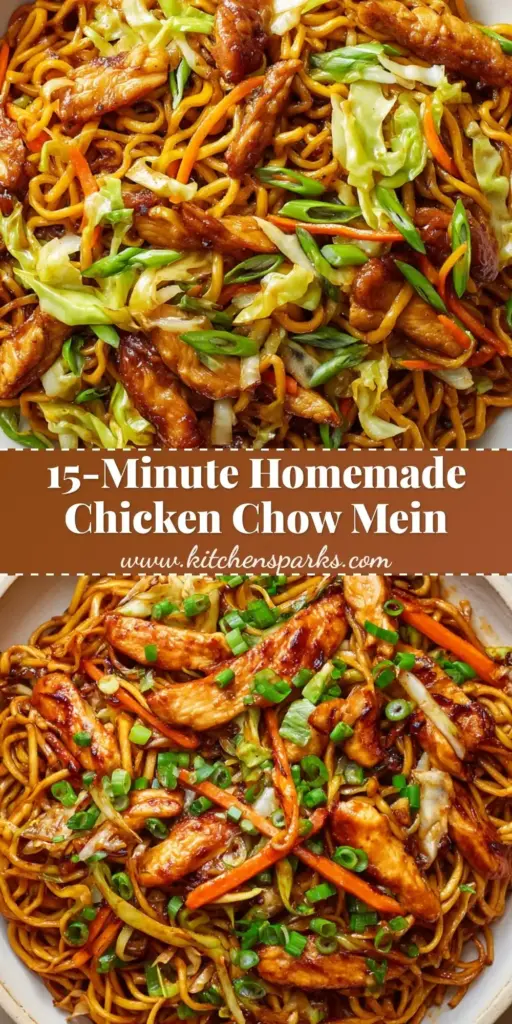
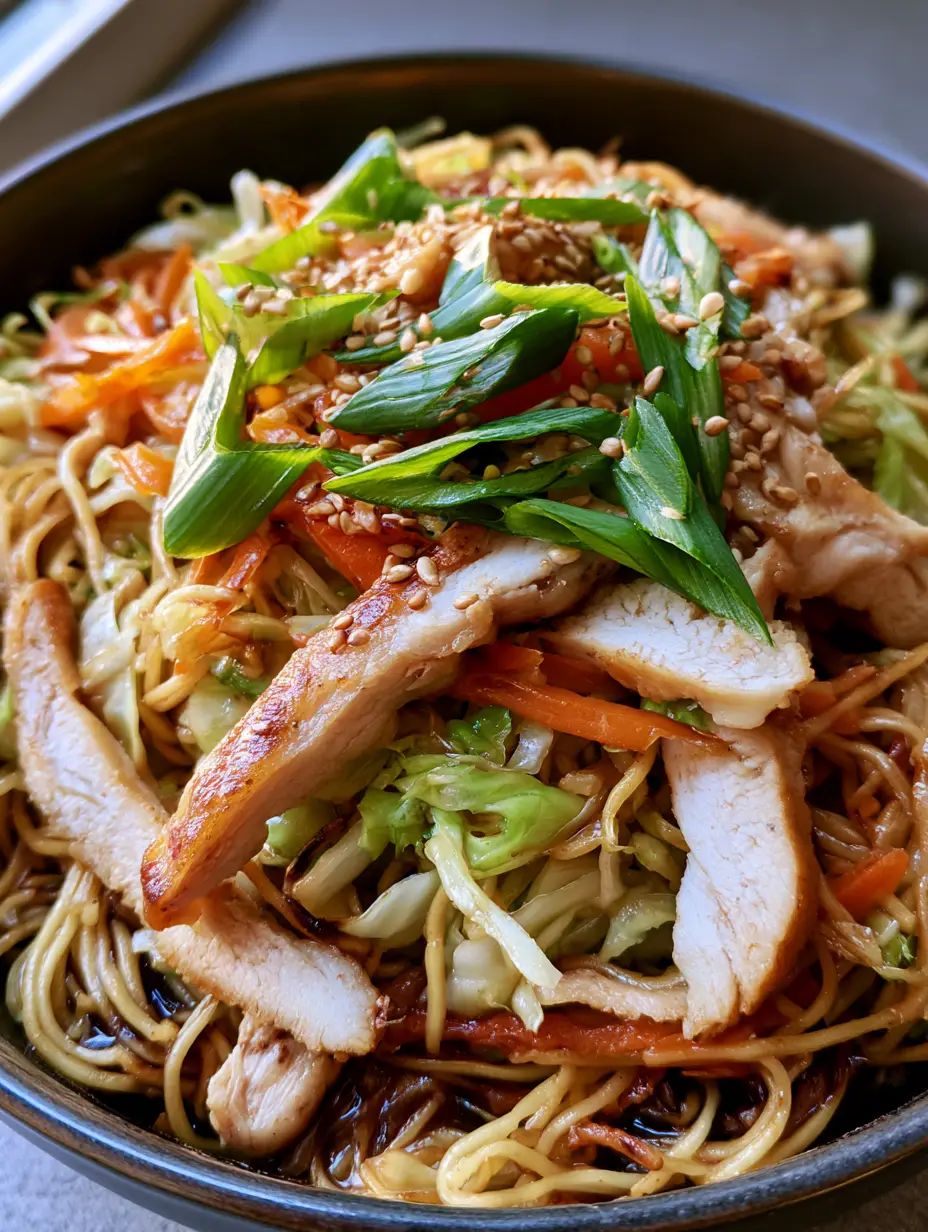
Imagine a steaming bowl where every strand of thin yellow wheat noodle is coated in a dark, semi-thick sauce that glistens under the light. You see the golden-brown edges of perfectly seared chicken breast strips nestled between vibrant, julienned orange carrots and soft-crunchy shredded green cabbage. Topped with a generous handful of angled scallions and a dusting of toasted sesame seeds, this Chicken Chow Mein is a visual and sensory masterpiece.
Why This Authentic Chicken Chow Mein Works
- The Perfect Noodle Texture: We use thin yellow wheat noodles that are boiled just until al dente, then stir-fried at high heat to achieve those signature slightly charred edges.
- Succulent Chicken: By using a quick “velveting” technique, the chicken breast stays incredibly tender while developing a golden-brown crust.
- High-Gloss Finish: Our sauce ratio creates a dark, semi-thick, and glossy coating that clings to the noodles rather than pooling at the bottom of the bowl.
- Visual Vibrancy: The contrast between the dark sauce, the orange carrots, and the bright green scallions makes this dish a Pinterest favorite.
If you love high-protein poultry dishes, you might also enjoy our Korean gochujang chicken for a spicier kick, or perhaps a comforting buffalo chicken pasta for your next meal prep session.
Essential Ingredients for Success
To achieve the forensic visual accuracy seen in our photos, each ingredient plays a specific role in the flavor profile and texture of the Chicken Chow Mein.
The Protein and Foundation
- 1 lb (450g) Chicken Breast: Sliced into thin strips. Chicken breast is preferred for its clean look and ability to sear quickly without becoming greasy.
- 10 oz (280g) Thin Yellow Wheat Noodles: These are the backbone of the dish. Look for “Chow Mein” noodles in the refrigerated or dry pasta aisle.
- 2 tbsp (30ml) Neutral Oil: Use vegetable, canola, or grapeseed oil. A high smoke point is essential for getting that charred noodle effect.
The Sauce (The Liquid Gold)
- 3 tbsp (45ml) Light Soy Sauce: Provides the essential saltiness and savory depth.
- 1.5 tbsp (22ml) Dark Soy Sauce: This is the secret to the dark, glossy color. It is thicker and less salty than light soy sauce.
- 1 tbsp (15ml) Oyster Sauce: Adds a rich, umami complexity and helps thicken the sauce to a semi-thick consistency.
- 1 tsp (5ml) Toasted Sesame Oil: For that unmistakable nutty aroma that hits you as soon as the bowl is served.
- 1 tsp (5g) Cornstarch: The thickening agent that ensures the sauce is glistening and glossy.
The Fresh Produce and Aromatics
- 2 cups (150g) Green Cabbage: Finely shredded. It provides a “soft-crunchy” texture that absorbs the sauce perfectly.
- 1 large (100g) Carrot: Carefully julienned into matchsticks to match the thickness of the noodles.
- 3 cloves Garlic: Minced finely to infuse the oil with aroma.
- 1 inch (2.5cm) Fresh Ginger: Grated. Ginger provides a sharp, fresh contrast to the salty soy sauce.
- 3-4 Scallions: Sliced at a sharp angle for a professional garnish.
- 1 tsp (5g) Toasted Sesame Seeds: For the final visual flourish and a tiny pop of texture.
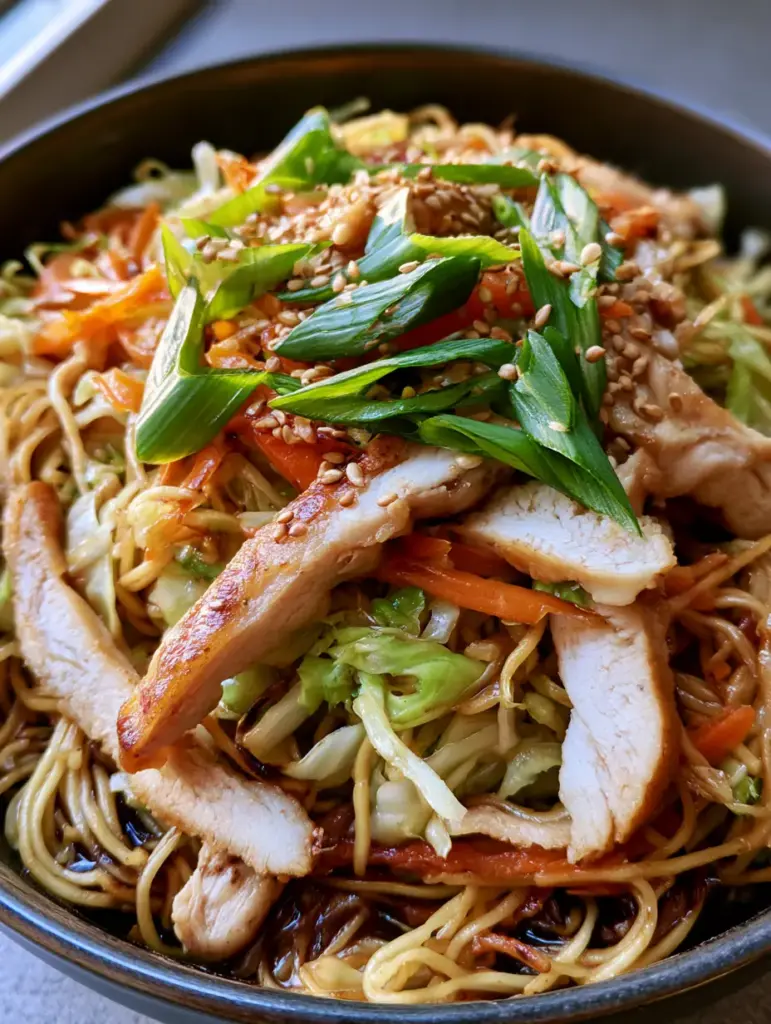
How to Make Chicken Chow Mein: Step-by-Step
Success in stir-frying is 90% preparation and 10% execution. Because the cooking process for Chicken Chow Mein happens so fast, you must have all your ingredients ready by the stove.
Step 1: Prep the Noodles and Chicken
Cook your thin yellow wheat noodles according to the package instructions, but stop 1 minute early. They should be al dente. Drain them and toss with a tiny drop of oil to prevent sticking.
Slice the chicken breast into thin, uniform strips. In a small bowl, toss the chicken with a pinch of salt and a teaspoon of cornstarch. This creates a barrier that keeps the meat juicy while helping it develop those golden-brown edges.
Step 2: Whisk the Signature Dark Sauce
In a measuring jug or small bowl, combine the light soy sauce, dark soy sauce, oyster sauce, sugar (optional), and cornstarch. Whisk until the cornstarch is completely dissolved. This mixture will transform into a glossy soy-based sauce once it hits the heat of the wok.
Step 3: Searing the Protein
Heat 1 tablespoon of oil in a large wok or skillet over high heat until it starts to shimmer. Add the chicken strips in a single layer. Do not move them for 60 seconds. This allows the chicken to develop a beautiful sear. Stir-fry for another 2 minutes until cooked through and golden-brown. Remove the chicken and set aside.
Step 4: Blistering the Vegetables
Add the remaining oil to the wok. Throw in the shredded green cabbage and julienned carrots. Stir-fry for 2-3 minutes. You are looking for a “soft-crunchy” state—the cabbage should be wilted but still have a bite, and the carrots should be vibrant orange and flexible.
Step 5: The Char and The Toss
Add the minced garlic and ginger to the center of the wok, cooking for 30 seconds until fragrant. Add the noodles back in. Using tongs or a spatula, spread the noodles out and let them sit against the hot surface for 30-45 seconds to get slightly charred.
Pour the sauce over the noodles and return the chicken to the pan. Toss everything vigorously over high heat. Watch as the sauce bubbles and thickens, turning into a dark, semi-thick, glossy coating that covers every ingredient.
For more delicious weeknight chicken ideas, don’t miss our honey BBQ chicken and rice or our incredibly easy slow cooker chicken breast.
Expert Tips for the Best Chicken Chow Mein
- High Heat is Non-Negotiable: To get the charred edges on the noodles, your pan needs to be screaming hot. If the pan is too cold, the noodles will steam instead of sear.
- Dark Soy Sauce is Key: You cannot achieve that dark ceramic bowl aesthetic without dark soy sauce. It provides the color that light soy sauce lacks.
- Dry the Noodles: After boiling the noodles, make sure they are well-drained. Excess water will thin out your glossy sauce and make the dish soggy.
- Don’t Overcrowd the Pan: If you are doubling the recipe, cook it in two batches. Overcrowding leads to a drop in temperature, preventing the golden-brown sear on the chicken.
Storage, Reheating & Freezing
Storage: Keep leftover Chicken Chow Mein in an airtight container in the refrigerator for up to 3 days. The flavors actually deepen overnight!
Reheating: For the best results, reheat in a skillet over medium-high heat with a splash of water or chicken broth. This loosens the glossy sauce and restores the noodle texture. Microwaving is faster but may soften the vegetables further.
Freezing: While you can freeze this dish for up to 2 months, the texture of the shredded green cabbage will change slightly upon thawing. Always thaw in the fridge before reheating.
What to Serve With This Dish
This Chicken Chow Mein is a complete meal on its own, but it pairs beautifully with crispy spring rolls or a light cucumber salad. If you’re looking for a side that’s a bit more indulgent, try serving it alongside our crispy chicken ranch snack wrap for a fun fusion feast.
Frequently Asked Questions
Traditional Chow Mein noodles are made from wheat flour and are not gluten-free. For a GF version, you can substitute with rice noodles, though the texture and ‘char’ will be different.
Yes! Chicken thighs are more forgiving and stay very juicy. Just ensure you trim the excess fat and sear them over high heat to get those golden-brown edges mentioned in the recipe.
The secret is high heat and short cooking times. Stir-fry the cabbage and carrots for only 2-3 minutes. They should be just tender enough to eat but still have a distinct snap.
Dark soy sauce is primarily for color and a hint of sweetness. If you can’t find it, you can substitute with extra light soy sauce and a teaspoon of molasses or brown sugar, though the color won’t be as dark and glossy.
The main difference lies in the cooking method. Chow Mein noodles are fried to create a slightly charred or crispy texture, whereas Lo Mein noodles are boiled and tossed in sauce without the high-heat frying step.
The Ultimate Chicken Chow Mein Recipe
Chicken Chow Mein: The Ultimate Better-Than-Takeout Guide
Ingredients
Equipment
Method
- Boil thin wheat noodles for 1 minute less than package directions. Drain and set aside.
- Heat oil in a wok until shimmering. Sear chicken strips until golden-brown and cooked through. Remove from wok.
- Add cabbage and carrots to the wok. Stir-fry for 2 minutes until soft-crunchy.
- Add noodles and chicken back to the wok. Pour over the dark soy sauce mixture and toss over high heat until glossy and charred.
Notes
Don't skip the dark soy sauce; it provides the essential color and gloss.
Save, Share & Follow!
Did this Chicken Chow Mein satisfy your takeout cravings? If so, please save this recipe to your Pinterest boards so you never lose it! We would love to see your creations—take a photo of your glistening noodle bowl and share it in the comments below. Don’t forget to leave a 5-star rating if you loved the recipe, and follow evay_eats for more restaurant-quality meals made right in your kitchen!