This balsamic orzo salad is the ultimate intersection of vibrant Mediterranean flavors and sophisticated textures. If you have been searching for a side dish that stops the scroll on Pinterest and commands attention at every summer gathering, this is the recipe you have been waiting for. With its glistening pearls of pasta and deep, syrupy glaze, it is as visually stunning as it is delicious.
Constructing a perfect balsamic orzo salad requires more than just tossing ingredients in a bowl. It is about the contrast between the creamy, large blocks of feta cheese and the acidic snap of oil-packed sun-dried tomatoes. Every bite offers a symphony of cracked black pepper and fresh basil chiffonade, making this a staple for meal prep or high-end entertaining.
Why This Mediterranean Orzo Salad Works
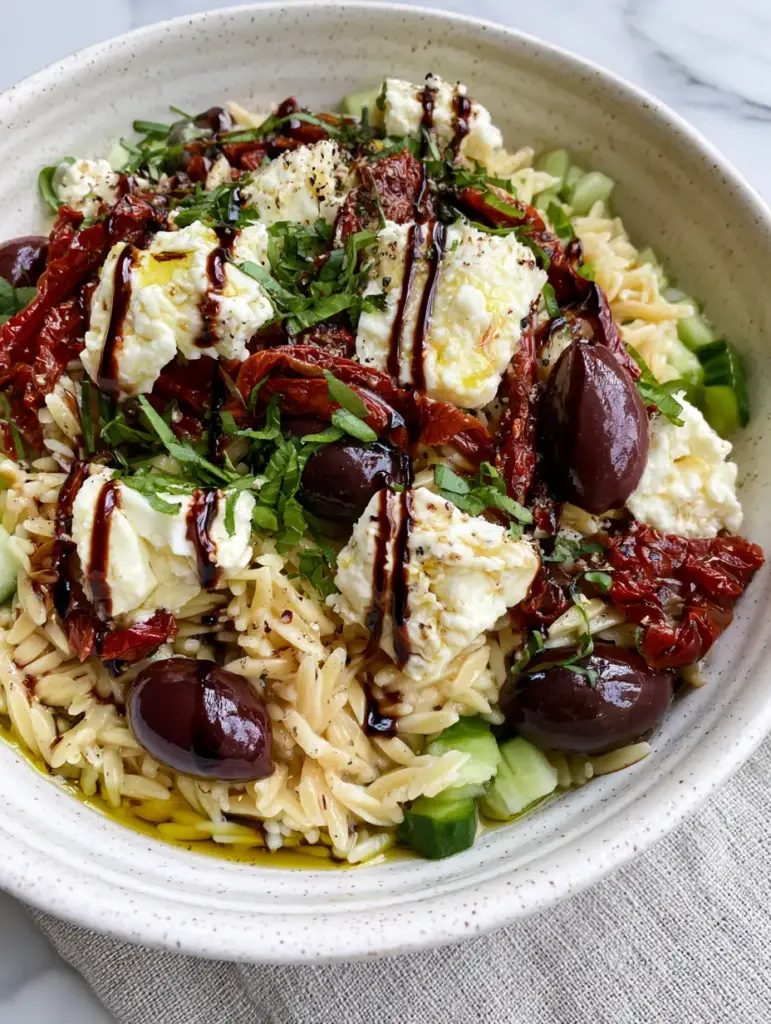
- Textural Harmony: The combination of al dente orzo pearls and crisp Persian cucumbers creates a satisfying mouthfeel that resists getting soggy.
- Visual Contrast: The dark, thick balsamic glaze creates a striking vertical visual against the off-white speckled ceramic of a serving bowl.
- Flavor Depth: We use whole pitted kalamata olives and sun-dried tomato strips to provide concentrated bursts of umami and brine.
- Make-Ahead Friendly: Unlike leaf-based salads, this balsamic orzo salad actually improves as it sits and marinates in the extra virgin olive oil.
If you love this flavor profile, you might also enjoy our mediterranean feta salad or a classic summer pasta salad for your next cookout.
The Essential Ingredients for Gourmet Results
To achieve the forensic visual accuracy of a high-end bistro salad, the quality of your ingredients is paramount. Each component in this balsamic orzo salad serves a specific culinary purpose.
Orzo Pasta: You will need 1.5 cups (250g) of dried orzo. This rice-shaped pasta acts as the canvas for our flavors, providing a tender yet firm base.
Thick Balsamic Glaze: Do not confuse this with standard balsamic vinegar. The glaze is reduced until syrupy, allowing it to sit on top of the pasta without immediately soaking in, creating those iconic dark drizzles.
Feta Cheese: We recommend buying a block of high-quality sheep’s milk feta and breaking it into large, rough-crumbled blocks. This provides a much better visual and creamy texture than the pre-crumbled “dust” found in tubs.
Sun-Dried Tomatoes: Use 1/2 cup (110g) of oil-packed sun-dried tomatoes, sliced into thin strips. The oil from the jar adds an incredible depth of flavor to the overall dressing.
Kalamata Olives: 1/2 cup (75g) of whole, pitted kalamata olives. Keeping them whole maintains their juicy integrity and looks beautiful against the green basil.
Persian Cucumbers: 2 small Persian cucumbers, diced but unpeeled. The skin adds a vibrant green pop and extra crunch that English cucumbers sometimes lack.
Fresh Basil: A large handful of fresh leaves, finely chiffonaded. This adds the essential aromatic finish that defines Mediterranean cooking.
Extra Virgin Olive Oil: 3 tablespoons (45ml) of high-quality oil to coat the warm pasta, ensuring the grains stay separate and glisten under the light.
Step-by-Step Construction Guide
1. Perfecting the Al Dente Orzo
Bring a large pot of salted water to a rolling boil. Add the orzo and cook for exactly 8-9 minutes. You are looking for a “pearl-like” texture—tender but with a distinct bite in the center.
Expert Tip: Drain the pasta and immediately toss it with 1 tablespoon (15ml) of extra virgin olive oil while it is still steaming. This prevents sticking and creates that signature glistening coating.
2. Preparing the Mediterranean Aromatics
While the pasta cools slightly, prepare your vegetables. Slice the sun-dried tomatoes into thin, elegant strips. Dice the Persian cucumbers into 1/2-inch (1.25cm) cubes, keeping the skins on for visual contrast.
Stack your basil leaves, roll them tightly like a cigar, and slice across thinly to create a bright green chiffonade. This technique ensures the basil doesn’t bruise and stays vibrant in your balsamic orzo salad.
3. The Assembly Layering Process
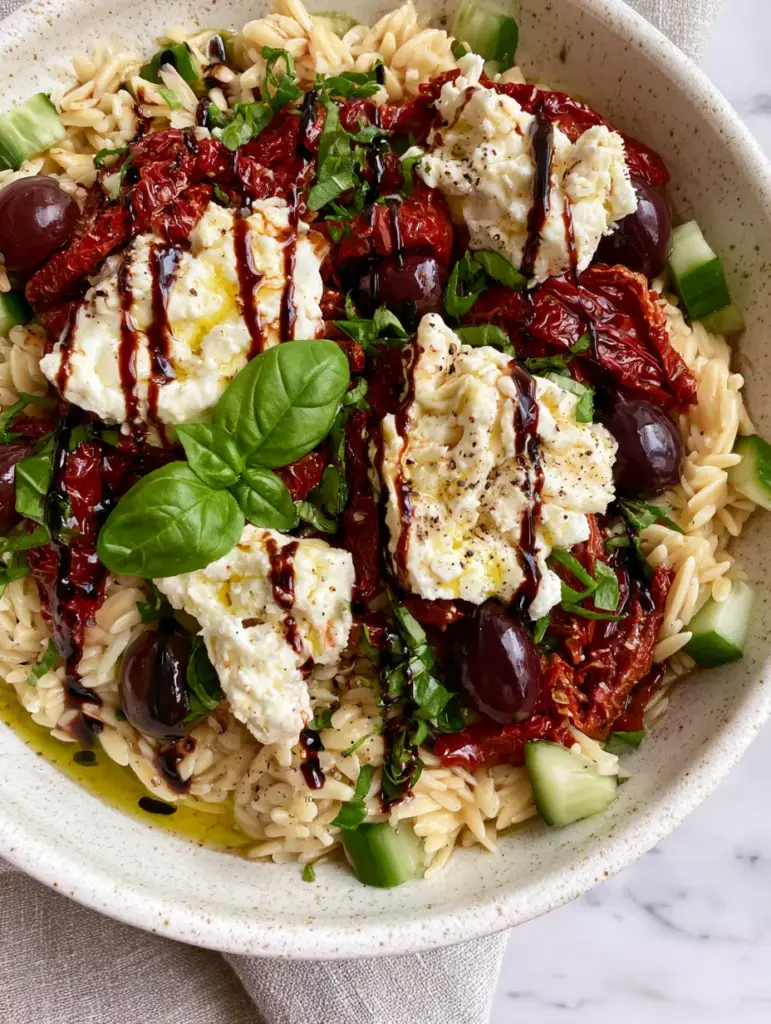
In a large handcrafted ceramic bowl, combine the oiled orzo with the cucumber cubes, whole kalamata olives, and sun-dried tomato strips. Add the remaining olive oil and a generous dusting of cracked black pepper.
Gently fold in the large feta cheese chunks. You want to keep the cheese intact rather than incorporating it fully into the pasta, which can make the salad look cloudy.
4. The Final Glaze Drizzle
Just before serving, take your thick balsamic glaze and apply vertical drizzles across the top of the salad. The dark syrup should sit prominently on the white feta and red tomatoes, creating a professional, high-contrast finish.
Looking for a protein-packed version? Try topping this with our grilled chicken orzo salad components for a full meal.
Expert Tips for Pinterest-Worthy Success
- Temperature Control: Never add the feta while the orzo is hot. Wait until it is room temperature to prevent the cheese from melting and losing its structural integrity.
- The Glaze Rule: Only add the balsamic glaze immediately before serving. Over time, the glaze will bleed into the pasta, losing the sharp visual contrast.
- Salt Management: Between the feta, the olives, and the sun-dried tomatoes, this salad is naturally salty. Taste before adding any additional sea salt.
- Bowl Choice: A shallow, wide bowl (like an off-white speckled ceramic) allows more of the ingredients to be visible on the surface, which is better for both photography and serving.
How to Store and Meal Prep
This balsamic orzo salad is a meal prepper’s dream. It stays fresh in an airtight container for up to 4 days in the refrigerator. If the pasta seems to have absorbed the oil after a day, simply toss with an extra teaspoon of olive oil to restore the glisten.
Do not freeze this salad. The cucumbers and feta will lose their texture upon thawing, resulting in a watery consistency.
What to Serve With This Dish
This versatile salad pairs beautifully with a variety of Mediterranean-inspired mains. We love serving it alongside grilled lemon-oregano chicken or a flaky white fish like sea bass. For a vegetarian feast, serve it with a side of fresh corn salad or a hearty tortellini salad for a pasta-heavy spread.
Frequently Asked Questions
Yes! Simply swap the traditional wheat-based orzo for a gluten-free orzo variety or use a short-grain brown rice for a similar texture and appearance.
Balsamic glaze is reduced and syrupy, whereas vinegar is thin. If you use vinegar, the pasta will absorb it quickly and you will lose the beautiful visual drizzle. You can make your own glaze by simmering balsamic vinegar with a bit of honey until it reduces by half.
The secret is to toss the orzo with a tablespoon of extra virgin olive oil immediately after draining while it is still warm. This coats each grain and keeps them separate as they cool.
This recipe is best served at room temperature or chilled. Serving it cold allows the flavors of the basil and sun-dried tomatoes to meld beautifully with the pasta.
The Ultimate Balsamic Orzo Salad Recipe
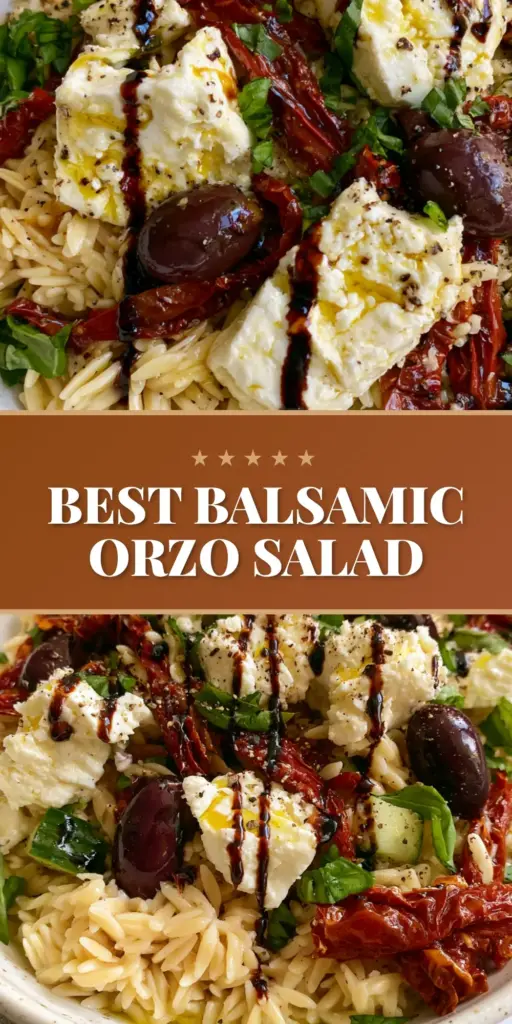
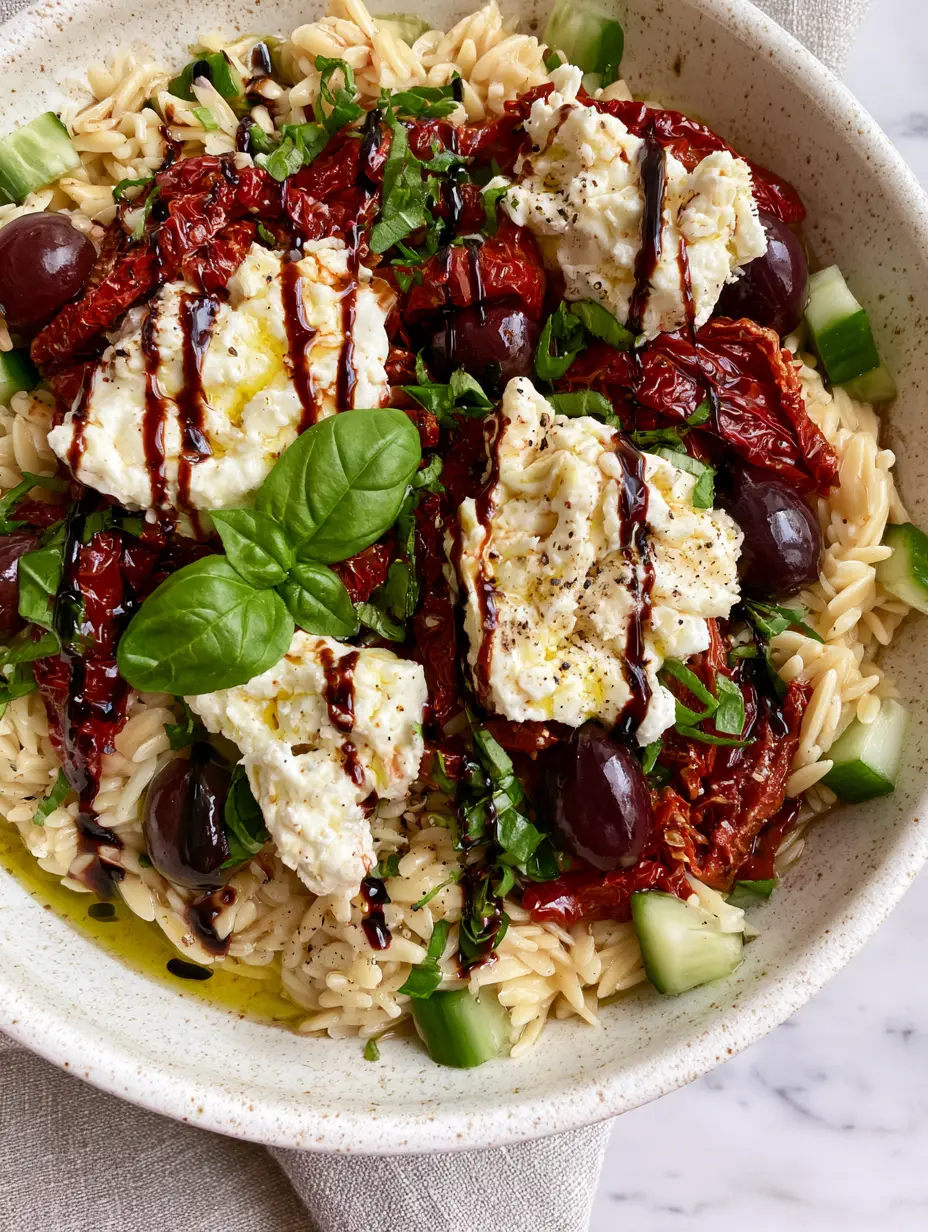
Balsamic Orzo Salad with Feta and Sun-Dried Tomatoes
Ingredients
Equipment
Method
- Bring a pot of salted water to boil. Cook orzo for 8-9 minutes until al dente.
- Drain orzo and immediately toss with 1 tablespoon of olive oil to prevent sticking.
- In a large bowl, mix cooled orzo with cucumbers, sun-dried tomatoes, and olives.
- Gently fold in the large feta chunks and remaining olive oil.
- Top with fresh basil, cracked black pepper, and vertical drizzles of thick balsamic glaze.
Notes
Wait until the pasta is room temperature before adding feta to keep the blocks intact.
Share Your Culinary Masterpiece!
We want to see your version of this balsamic orzo salad! Did you add extra basil? Or perhaps some grilled artichokes? Save this recipe to your Mediterranean Recipes board on Pinterest so you never lose it.
Leave a 5-star rating in the comments below and upload a photo of your dish. Your feedback helps our community grow and inspires other home cooks to get into the kitchen. For more viral-ready recipes, check out our caprese pasta salad!