If you have ever stepped into a bustling kebab house in Istanbul, you know that the secret to the meal isn’t just the grilled meat—it is the vibrant, tangy, and translucent sumac onion salad served on the side. This humble yet sophisticated condiment, known in Turkey as Sumaklı Soğan Salatası, provides the essential acidic counterpoint to rich, savory dishes.
Our version of this sumac onion salad focuses on achieving a specific forensic visual: paper-thin crescents of red onion that have been massaged until they are supple and stained a deep burgundy by high-quality sumac. The result is a shimmering, herbaceous bowl that looks as stunning as it tastes under soft, natural lighting.
Whether you are looking to elevate a simple grilled chicken breast or building an elaborate meze platter, this recipe delivers professional-grade results with minimal ingredients. Let’s dive into the culinary science of neutralizing the onion’s “bite” while preserving its beautiful crunch.
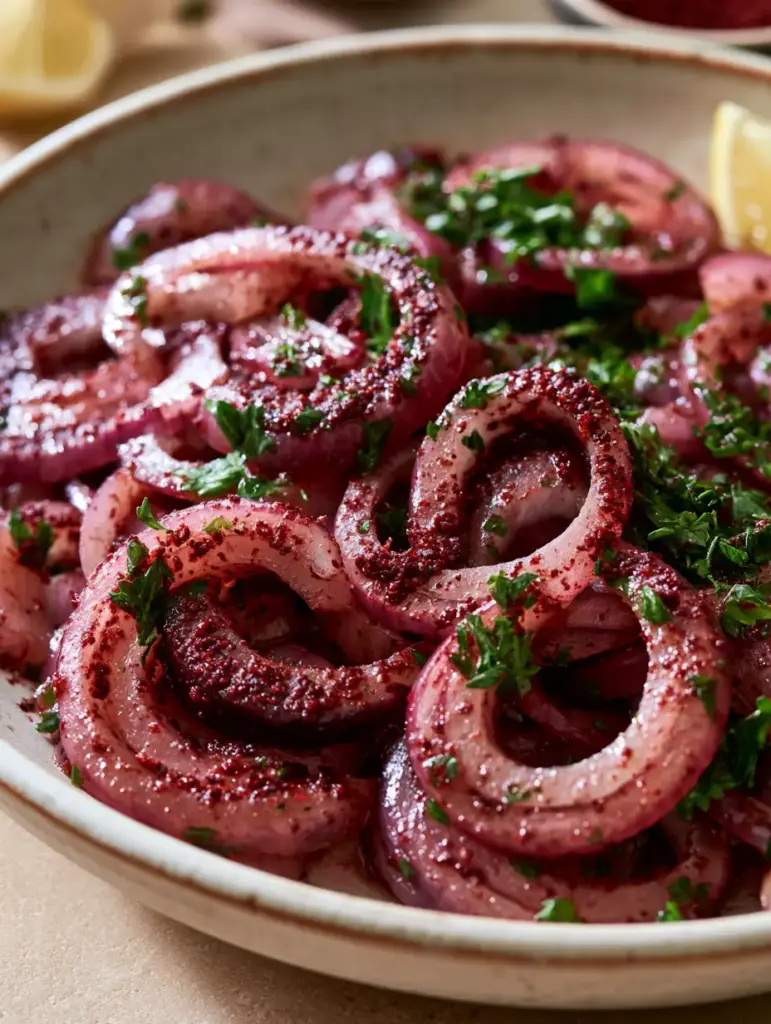
Why This Vibrant Turkish Onion Salad Belongs on Your Table
- Perfect Visual Texture: By using a mandoline, we achieve paper-thin, translucent crescents that catch the light and absorb the dressing more effectively than hand-cut slices.
- The “Massaging” Technique: We utilize a professional culinary method of salt-massaging the onions to break down cell walls, resulting in a softened, silky mouthfeel rather than a raw, sharp crunch.
- Deep Burgundy Hue: The generous use of grainy sumac powder provides a stunning visual contrast against the bright green flat-leaf parsley.
- Glossy Finish: High-quality extra virgin olive oil ensures every strand of onion has a shimmering, mouthwatering glow that signals freshness.
The Essential Aromatics for a Perfect Mediterranean Bowl
To achieve the exact look and flavor profile of our sumac onion salad, the quality of your spice rack is paramount. You cannot substitute the grainy texture of authentic sumac with a fine powder and expect the same rustic visual appeal.
Large Red Onions: Choose onions that are firm and heavy for their size. We need the vibrant purple outer layers to provide that signature color contrast when sliced into crescents.
Grainy Sumac Powder: Look for sumac that is deep burgundy and slightly coarse. This “graininess” is what creates the beautiful speckling on the onions seen in our visual blueprint.
Fresh Flat-Leaf Parsley: Unlike curly parsley, flat-leaf (Italian) parsley provides a soft texture and a clean, peppery finish. We use a “massive amount” to ensure the salad feels like a vegetable dish rather than just a garnish.
Extra Virgin Olive Oil: This acts as the “gloss” for the salad. It should be cold-pressed and fruit-forward to complement the sharp lemon juice.
Lemon Juice: Freshly squeezed droplets are non-negotiable. Bottled juice lacks the enzymatic brightness required to “cook” the onions slightly in their marinade.
Aleppo Pepper Flakes: These provide a mild, fruity heat and distinct red flecks. If you cannot find Aleppo pepper, a very mild crushed red pepper or Urfa Biber can work, but Aleppo is the gold standard for authenticity.
Sea Salt Flakes: Used for both the softening process and the final seasoning, flakes provide a visible “crunch” and a burst of salinity that finer salts lack.
Tools for Achieving Translucent, Paper-Thin Slices
To recreate the handheld smartphone photo aesthetic of our sumac onion salad, the prep work must be precise. You will need a few key tools to ensure the onions are structurally sound and visually delicate.
A Japanese-style mandoline is the most important tool in your arsenal. It allows for consistent 1mm thickness, which is impossible to achieve with a standard chef’s knife for an entire batch. This thickness ensures the onions become translucent when massaged.
You will also need a large mixing bowl—ideally stainless steel or ceramic—to give you enough room to toss the “massive amount” of parsley without bruising the delicate leaves. A wooden spoon is helpful for the final toss, as seen in our blueprint, but your hands are the best tool for the initial softening phase.
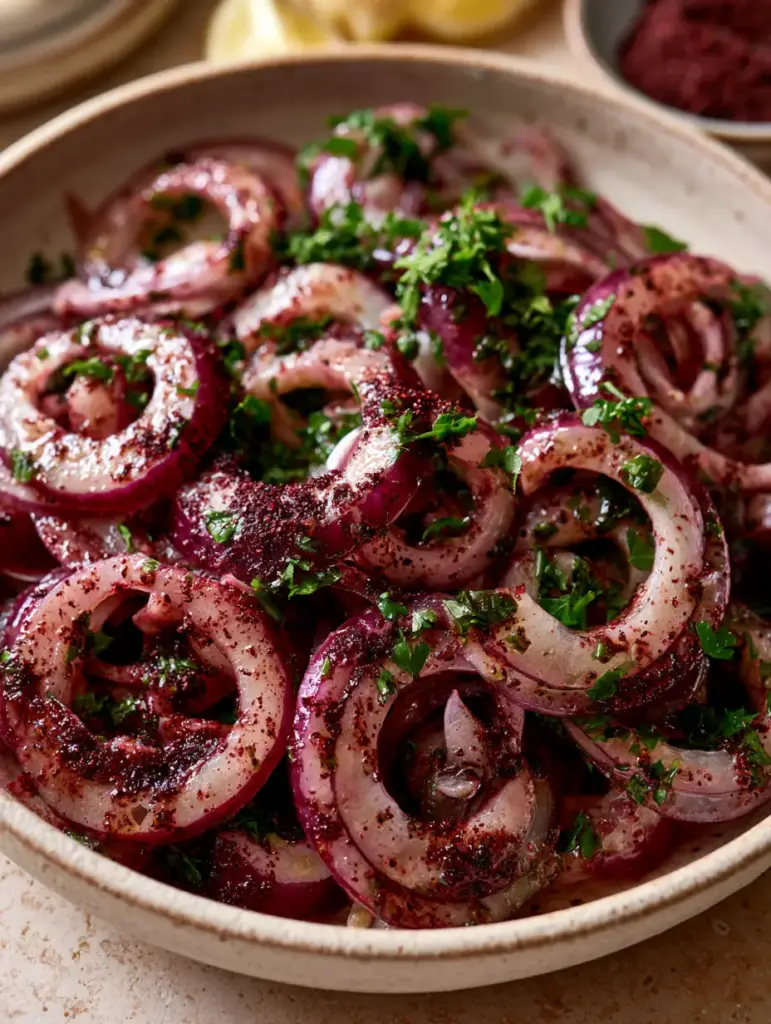
Mastering the Art of the Onion Massage
Preparing the Paper-Thin Crescents
Start by peeling 2 large red onions (approx. 500g) and cutting them in half from pole to pole. Place the flat side down on your mandoline and slice into paper-thin crescents. You are looking for a thickness that is almost see-through when held up to the light.
The Salt Massaging Phase
Place the sliced onions in a bowl and sprinkle with 1 tsp (5g) of sea salt flakes. Use your clean hands to gently squeeze and toss the onions for about 2-3 minutes. You will feel the onions transition from rigid and sharp to soft and flexible.
The Sumac Infusion
Add 2 tbsp (16g) of deep red sumac powder to the softened onions. Massage the spice into the onion fibers until every crescent is stained a beautiful, grainy burgundy. This step ensures the flavor is deep within the onion, not just sitting on the surface.
The Final Herbaceous Toss
Fold in 2 cups (60g) of roughly chopped flat-leaf parsley. The goal is a 1:2 ratio of parsley to onions. Drizzle with 3 tbsp (45ml) of extra virgin olive oil and the juice of 1 large lemon (approx. 30ml). Toss gently with a wooden spoon until glossy and shimmering.
Expert Tips for Success
- Rinse if Necessary: If you find red onions particularly pungent, you can rinse the sliced onions in ice water for 5 minutes before massaging them with salt. This removes the propanethial S-oxide (the gas that makes you cry).
- Don’t Over-Chop: The parsley should be “roughly chopped,” meaning some leaves are nearly whole. This adds to the rustic, authentic lifestyle look of the dish.
- Let it Rest: While beautiful immediately, letting the salad sit for 15 minutes allows the lemon juice to further “pickle” the onions, enhancing the translucency.
- Temperature Matters: Serve this salad at room temperature. Cold olive oil can turn cloudy and lose that “shimmer” described in our visual prompt.
Creative Ways to Serve These Marinated Onions
This sumac onion salad is a versatile powerhouse. It is a traditional companion for Turkish onion salad variations and works beautifully as a bright topping for meat-heavy dishes.
Try layering these onions over a Mediterranean feta salad for added depth, or serve them alongside a variety of summer salad recipes at your next outdoor barbecue. The acidity of the sumac helps cut through the richness of grilled halloumi or lamb koftas.
If you are exploring more vegetable-forward sides, these onions also pair surprisingly well with a crisp cucumber salad or as a zesty addition to a spaghetti salad for a fusion twist.
Flavor Preservation and Storage Guidelines
Because this salad relies on the freshness of the parsley and the “shimmer” of the oil, it is best enjoyed within 4 hours of preparation. However, the onions themselves will stay delicious for up to 3 days in an airtight container in the refrigerator.
Note that the parsley will wilt over time as it sits in the acidic lemon juice. If you are making this ahead of time, massage the onions with sumac and salt, then add the fresh parsley and oil just before serving to maintain that “vibrant” green color.
Your Questions About Preparing Sumac Onions Answered
While you can, red onions are preferred for their mild flavor and stunning purple color, which turns a beautiful burgundy when combined with sumac.
Generally, no. The heat comes from Aleppo pepper, which is very mild and fruity. You can omit the pepper flakes if you prefer a completely mild salad.
It is bright, tangy, and slightly earthy with a peppery finish. The sumac provides a lemon-like acidity without the sharpness of vinegar, while the massaged onions are mellow and savory.
Sumac is a spice made from the dried and ground berries of the wild sumac flower. It is a staple in Middle Eastern cooking, prized for its sour, citrus-like flavor.
Massaging with salt breaks down the cellular structure of the raw onion. This draws out excess moisture, softens the texture from crunchy to supple, and removes the harsh sulfurous bite.
The Definitive Sumac Onion Salad Recipe
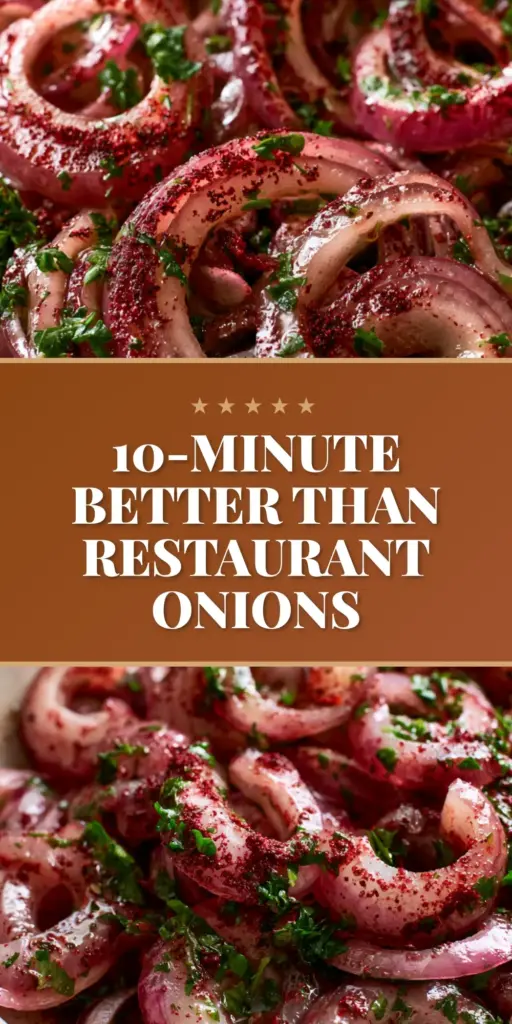
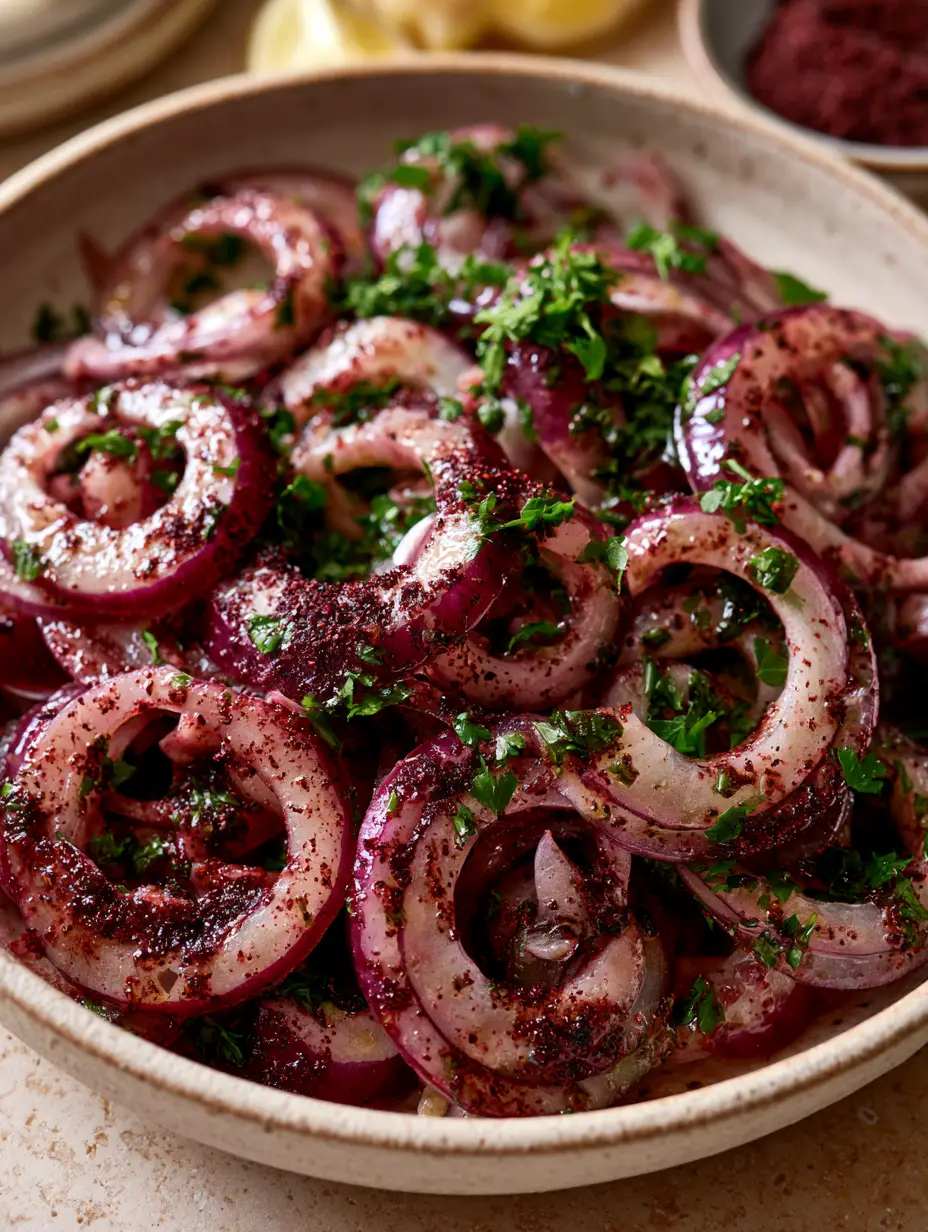
Sumac Onion Salad: The Authentic Turkish Marinated Red Onion Garnish
Ingredients
Equipment
Method
- Using a mandoline, slice the red onions into paper-thin, translucent crescents.
- In a large bowl, combine onions and sea salt flakes. Massage with your hands for 2-3 minutes until the onions are softened and flexible.
- Sprinkle the grainy sumac over the onions and continue to massage until the crescents are stained deep burgundy.
- Add the massive amount of parsley, olive oil, lemon juice, and Aleppo pepper. Toss with a wooden spoon until every piece is glossy and shimmering.
Notes
Massage the onions until they lose their rigidity to ensure the best texture.
Closing & Call to Action
The beauty of a sumac onion salad lies in its simplicity and its striking visual contrast. When you master the salt-massage technique and use high-quality sumac, you transform a basic root vegetable into a shimmering, acidic masterpiece that rivals any restaurant garnish.
We would love to see your vibrant creations! If you make this recipe, please leave a comment below and let us know what you served it with. Don’t forget to save this recipe to your favorite boards on Pinterest so you always have the perfect Mediterranean side dish at your fingertips!