There is a specific sensory magic that happens in Turkish kebab houses. Before the sizzling meats arrive, a plate of Turkish onion salad hits the table. It is vibrant, tangy, and impossibly beautiful. This isn’t your average raw onion garnish; it is a meticulously prepared condiment where the sharp bite of red onion is transformed into a mellow, translucent delicacy dusted with the deep burgundy of crushed sumac berries.
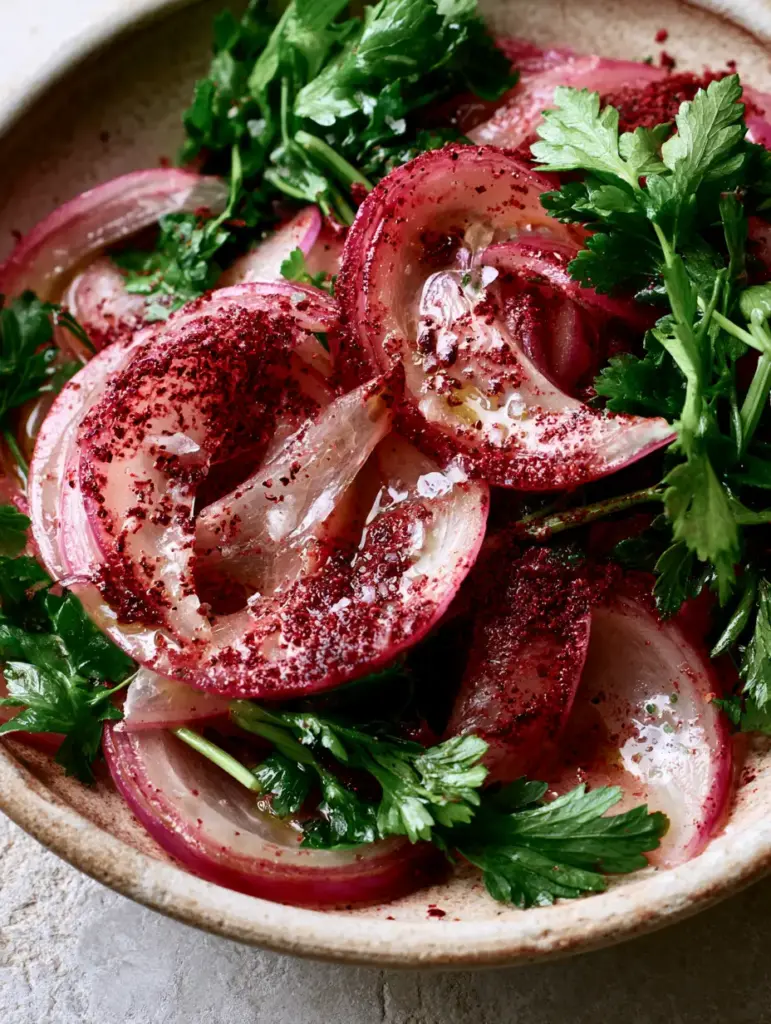
When you look at this salad, you should see paper-thin red onion half-moons that have lost their aggressive crunch in favor of a soft, wilted texture. They glisten under a light sheen of extra virgin olive oil, punctuated by the bright green of freshly chopped flat-leaf parsley. Droplets of fresh lemon juice and a light sprinkle of flaky sea salt reflect the light, promising a burst of acidity and mineral crunch in every bite.
In this guide, we will explore the culinary forensics of achieving that perfect macerated texture. We will dive deep into the science of sumac and why the technique of “massaging” the onions is the non-negotiable secret to an authentic Turkish dining experience at home.
The Irresistible Appeal of This Classic Sumac Condiment
- Textural Transformation: By using professional salt-rubbing techniques, we turn sharp, rigid onions into soft, pliable ribbons that melt in your mouth.
- Visual Brilliance: The contrast between the deep burgundy sumac, the vibrant violet onions, and the verdant parsley makes this a show-stopping addition to any spread.
- Perfect Flavor Balance: This salad offers a masterclass in balancing “fat, acid, and salt,” cutting through the richness of grilled meats or creamy dips.
- Lightning Fast Prep: Despite its complex flavor profile, you can have this restaurant-quality side ready in under 15 minutes.
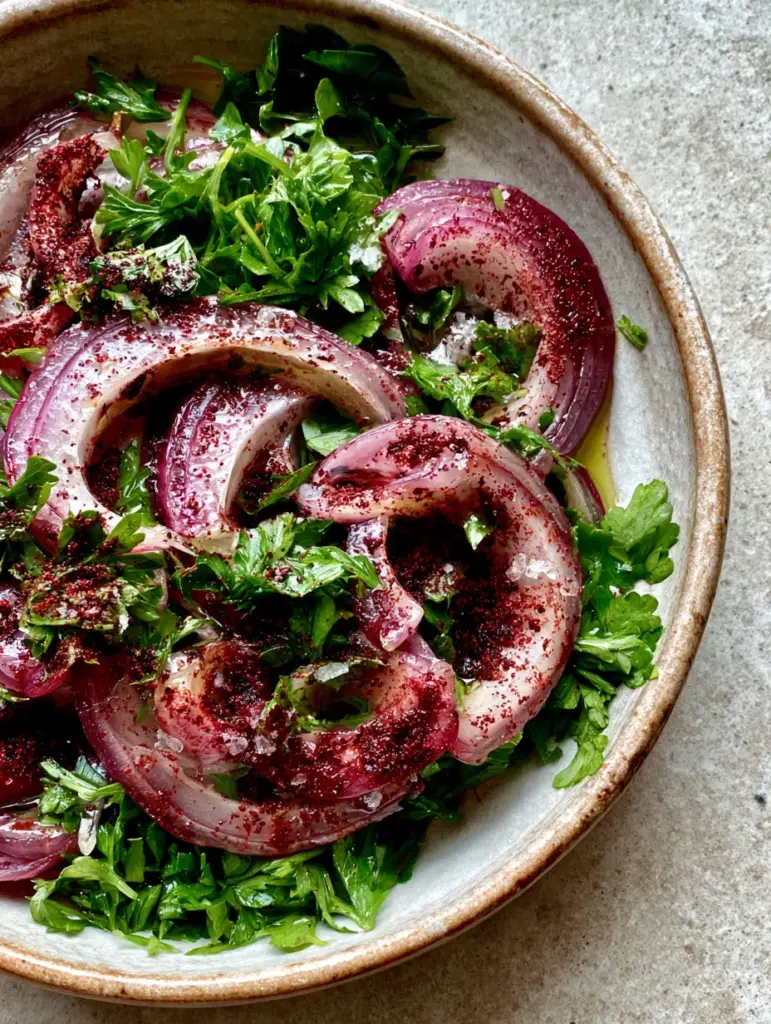
Essential Components for a Vibrant Turkish Onion Salad
To achieve the specific visual and flavor profile described in our blueprint, every ingredient must be selected for its quality and prepared with precision. Here is what you will need for the ultimate Turkish onion salad.
Large Red Onions: Choose onions that are firm and heavy for their size. Red onions provide the essential purple-red hue and a natural sweetness that develops once macerated.
Ground Burgundy Sumac: This is the soul of the dish. It provides a unique, tart, citrus-like flavor and the characteristic dark red “dust” that clings to the onion edges.
Fresh Flat-Leaf Parsley: Use abundant clusters of the flat-leaf variety (Italian parsley) rather than curly. It offers a cleaner mouthfeel and a more sophisticated herbaceous note.
Extra Virgin Olive Oil: You want a high-quality, cold-pressed oil that creates a glistening sheen without feeling greasy. It acts as the vehicle for the sumac and salt to coat every crevice.
Fresh Lemon Juice: Never use bottled juice here. The visible droplets of fresh lemon juice provide the high-frequency acidity needed to brighten the earthy sumac.
Flaky Sea Salt: Unlike table salt, flaky sea salt (like Maldon) provides a reflective visual quality and a focused “pop” of seasoning that enhances the other ingredients.
The Tools You Need for Culinary Precision
To achieve the “paper-thin” and “translucent” look required for an authentic Turkish onion salad, your tool kit is just as important as your ingredients.
A Sharp Mandoline or Chef’s Knife: To get those translucent half-moons, a mandoline is your best friend. If using a knife, ensure it is freshly sharpened to avoid bruising the onion cell walls.
Large Mixing Bowl: You need enough space to manually “rub” or massage the onions without spilling. A wide ceramic or stainless steel bowl works best.
Fine-Mesh Sieve (Optional): If you prefer a milder onion flavor, you may want to rinse the onions after the salt rub, though for a traditional wilted texture, this is often skipped.
Step-by-Step Instructions for the Perfect Macerated Salad
Mastering the Thin-Slicing Technique
Start by peeling 2 large (300g) red onions. Cut them in half from the root to the stem. Place the flat side down on your cutting board or mandoline.
Slice the onions into paper-thin half-moons, roughly 1/16th of an inch (1.5mm) thick. The goal is for the slices to be so thin they are nearly translucent when held up to the light.
The Secret “Wilt and Rub” Method
Place your sliced onions in a large bowl and sprinkle with 1 tsp (6g) of flaky sea salt. Use your clean hands to firmly massage and squeeze the onions for 2-3 minutes.
You will feel the onions lose their rigidity and start to “weep” liquid. This process breaks down the sulfurous compounds that cause raw onion breath and creates that sought-after soft, wilted texture seen in professional Turkish kitchens.
Infusing the Sumac and Herbs
Once the onions are pliable, add 2 tbsp (12g) of ground burgundy sumac. Use your hands or a spoon to toss the onions until the sumac is heavily dusted and clinging to the edges of every onion ribbon.
Fold in 1 cup (30g) of freshly chopped flat-leaf parsley. Use large clusters of the leaves to ensure the green is prominent and not lost among the red onions.
The Finishing Glisten and Seasoning
Drizzle 3 tbsp (45ml) of extra virgin olive oil over the mixture. Squeeze 1 tbsp (15ml) of fresh lemon juice across the top, looking for those distinct droplets to sit on the surface.
Finish with an additional light sprinkle of flaky sea salt. The salt crystals should catch the light against the glistening oil and the deep red of the sumac.
Expert Tips for Success
- Slicing Direction Matters: Always slice “with the grain” (from pole to pole) to ensure the onions hold their shape even after they have wilted.
- Sumac Quality: Look for sumac that is deep burgundy, not brown. Brown sumac is often old and has lost its characteristic lemony zing.
- The Resting Period: Let the salad sit for 10 minutes before serving. This allows the lemon and salt to further macerate the onions, deepening the color of the sumac.
- Don’t Over-Chop: When prepping the parsley, a rough chop is better than a fine mince. You want “abundant clusters” of green to provide a visual and textural contrast.
Storage and Preparation in Advance
The Turkish onion salad is best enjoyed within a few hours of making while the parsley is still bright and the onions have that perfect glistening sheen.
However, you can store leftovers in an airtight container in the refrigerator for up to 2 days. Note that the parsley will darken and the onions will release more purple pigment into the oil over time.
If you are meal prepping, slice and salt-rub the onions ahead of time, but wait to add the oil, lemon, and parsley until just before you are ready to serve.
What to Serve With This Vibrant Side
This salad is the ultimate companion to grilled proteins. It is traditionally served alongside Adana kebabs or lamb chops, but its versatility extends much further.
For a complete Mediterranean feast, pair this with a refreshing cucumber salad or a hearty Mediterranean feta salad. The acidity of the onions also works beautifully to cut through the sweetness of a watermelon and feta salad during the summer months.
If you are looking for more inspiration for your next cookout, explore our collection of summer salad recipes to find the perfect pairing for your grilled meats.
Frequently Asked Questions
While you can use white or yellow onions, red onions are preferred for their color and slightly milder raw flavor. White onions will be much sharper and won’t provide the same visual contrast.
The massaging technique with salt in this recipe removes much of the bite. For even milder onions, you can soak the slices in ice water for 10 minutes before rubbing them with salt.
In many regions, this sumac onion salad is called ‘Sumac Onion Salad.’ However, ‘Piyaz’ often refers to a similar salad that also includes white beans (Cannellini) and sometimes boiled eggs.
Sumac has a bright, tart, and citrusy flavor. It provides the acidity similar to lemon but with a deeper, earthy fruitiness that complements the sweetness of red onions.
If you cannot find sumac, use extra lemon zest and a pinch of paprika for color, though the unique tangy-earthy profile of authentic Turkish sumac is hard to perfectly replicate.
The Final Recipe for Authentic Turkish Onion Salad
Bring the authentic taste of a Turkish grill house to your kitchen with this simple yet sophisticated side dish. The combination of pungent onion, tart sumac, and rich olive oil creates a flavor profile that is truly greater than the sum of its parts.
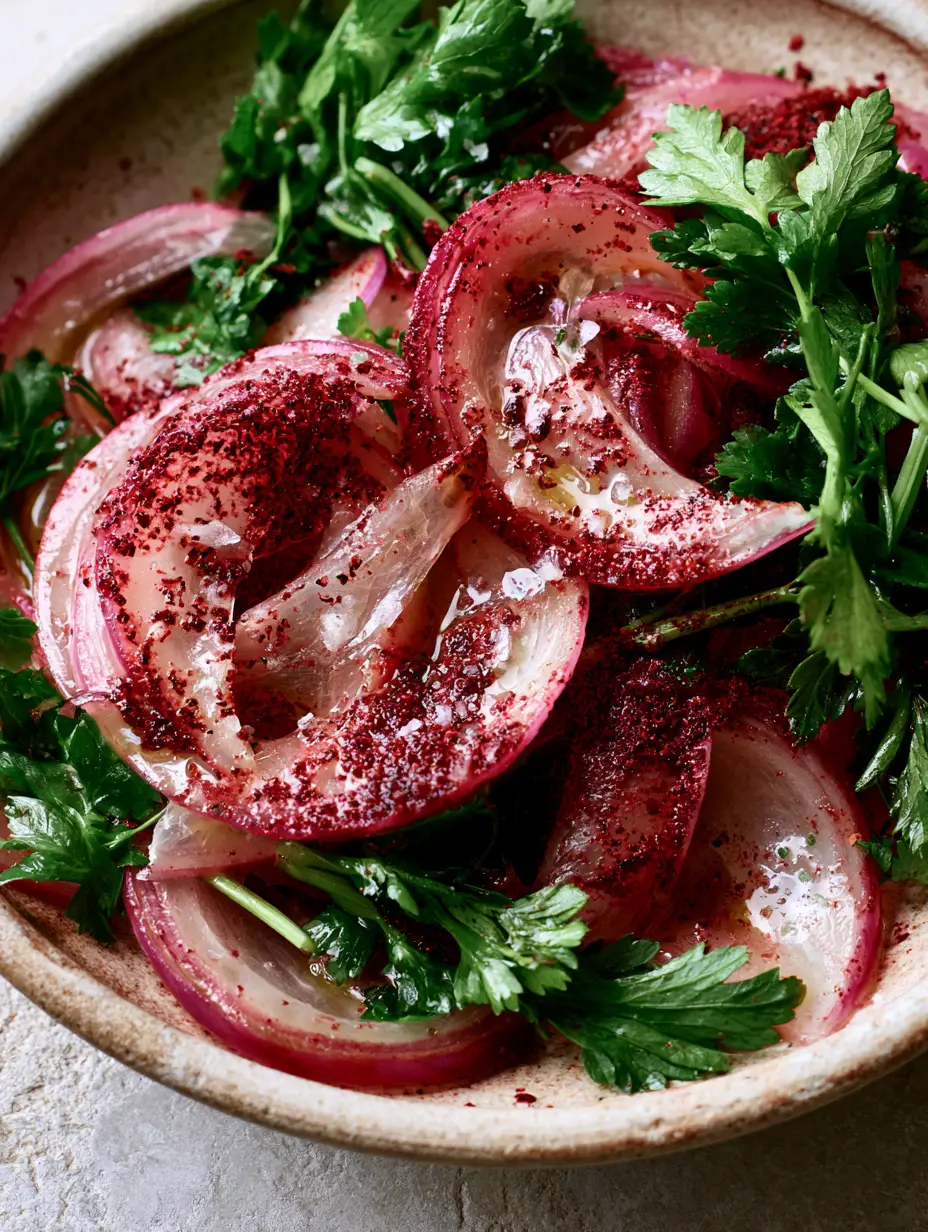
Turkish Onion Salad: The Vibrant Sumac-Rubbed Side Dish for Every Table
Ingredients
Equipment
Method
- Using a mandoline or sharp knife, slice the red onions into paper-thin, translucent half-moons.
- Place onions in a bowl with 1 tsp salt. Rub and squeeze firmly with your hands for 2-3 minutes until they are soft, wilted, and slightly weeping.
- Add the sumac and chopped parsley to the onions. Toss thoroughly until the burgundy powder clings to the edges of the onions.
- Drizzle with olive oil and lemon juice. Toss gently and garnish with an extra sprinkle of flaky salt before serving.
Notes
Use only fresh lemon juice for the best visual droplets.
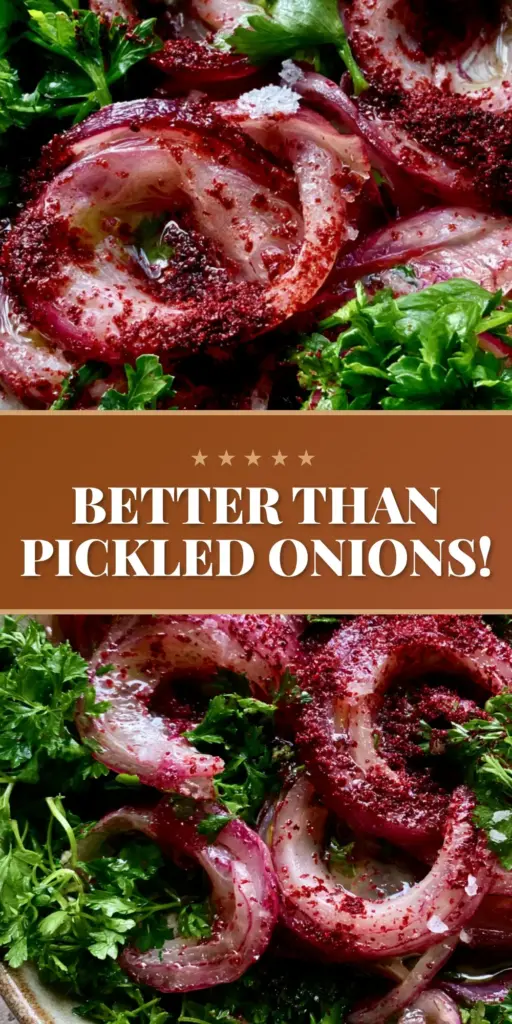
Closing & Call to Action
This Turkish onion salad is a testament to the power of simple, high-quality ingredients. Whether you’re serving it over grilled chicken or as part of a large mezze platter, it always brings a bright, professional touch to the meal.
Did you try the salt-rubbing technique? Let us know in the comments how your onions turned out! Don’t forget to sign up for our newsletter for more culinary deep-dives and share this recipe to your favorite board on Pinterest so you never lose it.