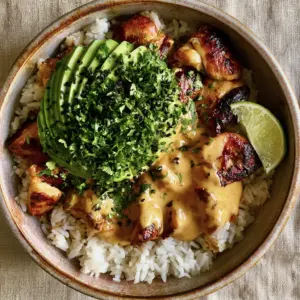
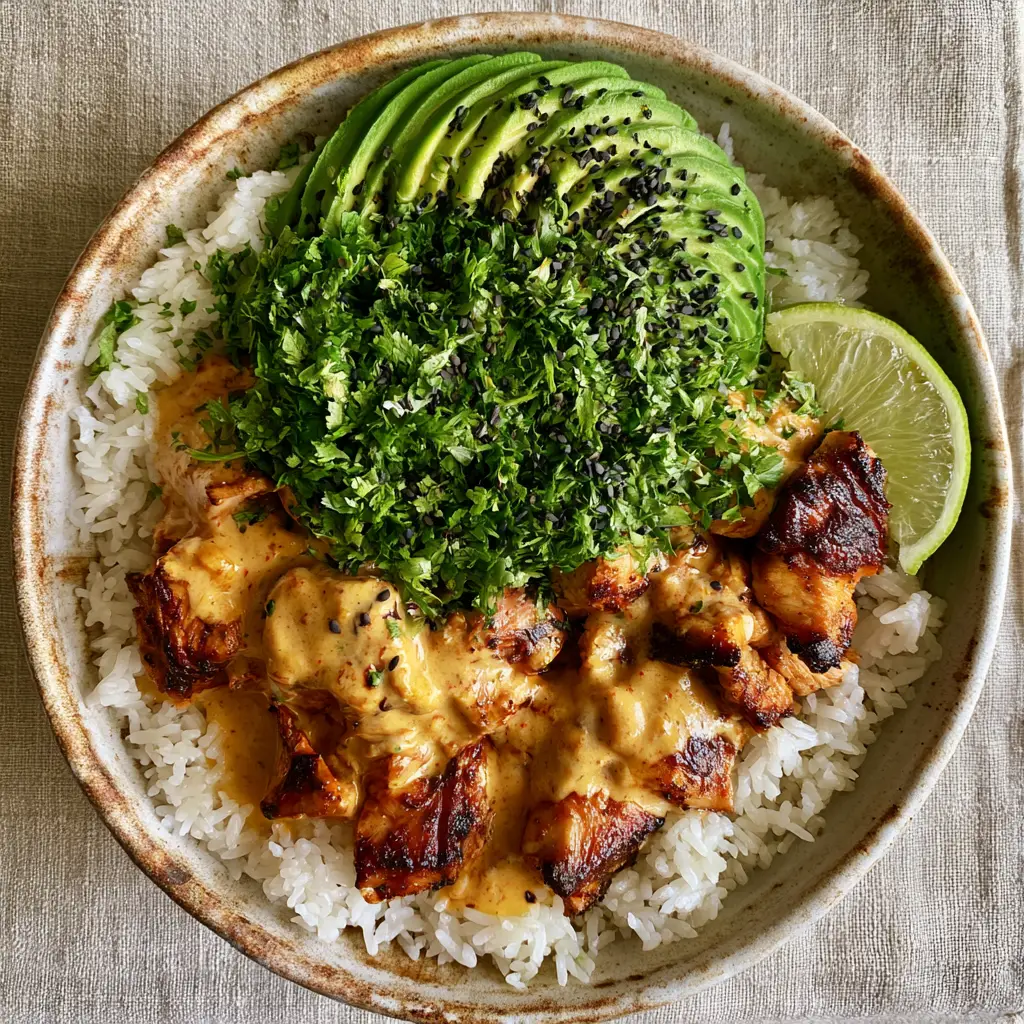
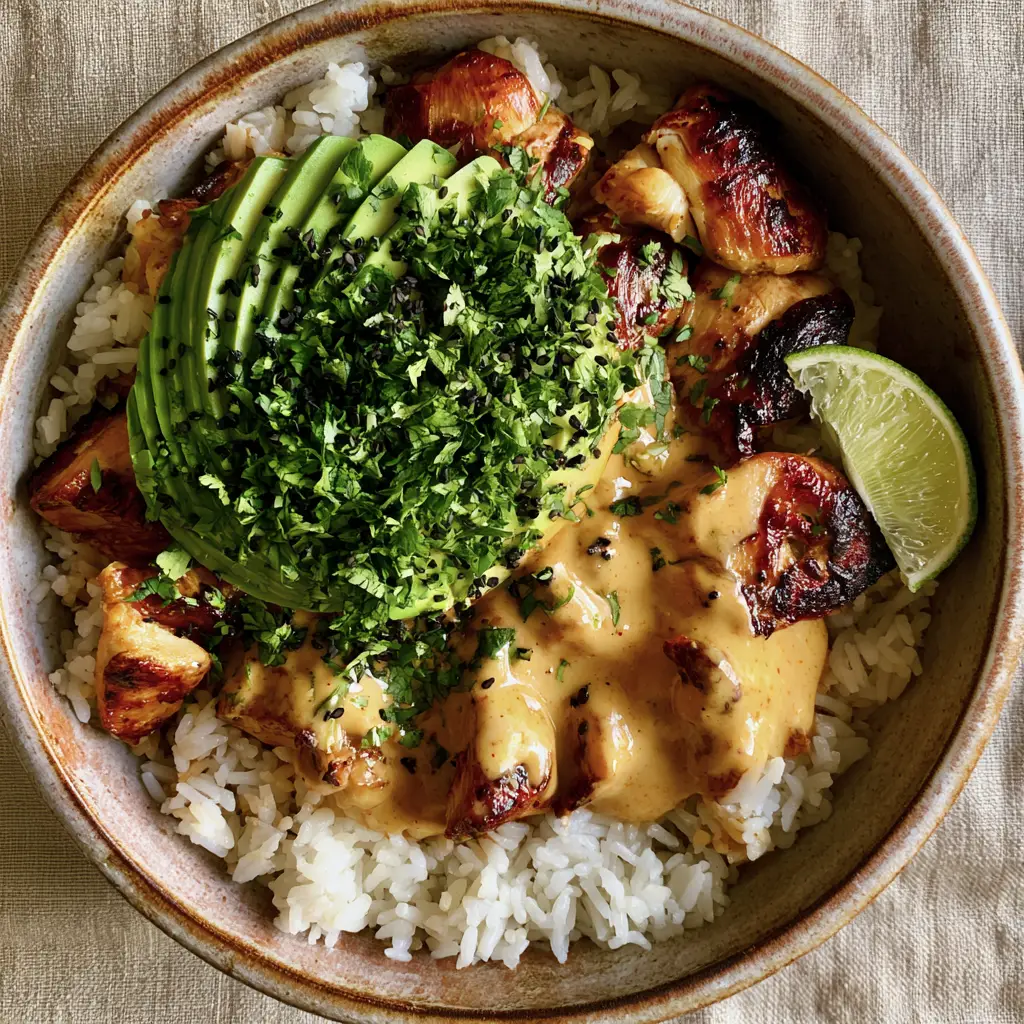
The Coconut Chicken Rice Bowl is the ultimate intersection of tropical comfort and high-end culinary aesthetics. Imagine a rustic ceramic bowl cradling individual, fluffy grains of jasmine rice, topped with chicken that boasts deep, golden-brown char marks and a sauce so glossy it reflects the morning light. This isn’t just a meal; it is a sensory experience designed for the home cook who values both flavor depth and visual perfection.
In this guide, we are breaking down the science of the perfect sear and the emulsion required to achieve that signature pale-orange coconut glow. Whether you are looking for a vibrant weeknight dinner or a meal-prep masterpiece, this bowl delivers a professional-grade result every single time. Let’s dive into the techniques that transform simple pantry staples into a restaurant-quality dish.
Why This Specific Coconut Chicken Rice Bowl Wins Every Time
- The Contrast of Textures: You get the snap of the charred chicken skin against the velvety, thick coconut reduction and the buttery softness of ripe avocado.
- Visual Masterpiece: The vibrant green cilantro and black sesame seeds against the pale-orange sauce create a high-contrast plate that looks like it walked off a magazine set.
- Fluffy Grain Architecture: By using specific steaming methods, we ensure the jasmine rice remains individual and light, never mushy or clumped.
- Balanced Flavor Profile: A single lime wedge provides the essential acidity to cut through the rich, fatty coconut milk and creamy avocado.
The Anatomy of a Perfect Tropical Chicken Bowl
Every ingredient in this Coconut Chicken Rice Bowl serves a dual purpose: structural integrity and flavor enhancement. To achieve the visual in our blueprint, we must select ingredients that behave predictably under heat.
Boneless Skinless Chicken Breast: 1.5 lbs (680g). We use breast meat cut into uniform cubes to ensure even searing and that specific “dark golden char” without overcooking the interior.
Jasmine Rice: 1.5 cups (275g). This long-grain variety provides the floral aroma and the “fluffy, individual grain” texture required for the foundation of the bowl.
Full-Fat Coconut Milk: 1 can (400ml). It is vital to use full-fat milk to achieve the “thick, velvety, glossy” sauce; light coconut milk will be too watery and won’t pool correctly.
Red Curry Paste: 2 tbsp (30g). This provides the “pale-orange” hue and a foundational warmth without overwhelming the delicate coconut notes.
Avocado: 1 large, ripe. The “vibrant fan” of green avocado is a critical visual component that adds a cool, creamy element to the warm chicken.
Fresh Cilantro: 1/2 cup (15g), loosely packed. Chopped finely into “flakes,” this adds the bright green contrast that makes the dish pop visually.
Black Sesame Seeds: 1 tsp (5g). These provide a sophisticated “heavy dusting” and a subtle nutty crunch that complements the tropical theme.
Fresh Lime: 1 whole fruit. The juice is used for balance, while the “single lime wedge” on the side is the final touch for the authentic smartphone photography aesthetic.
High-Smoke Point Oil: 2 tbsp (30ml) of avocado or grapeseed oil. This is an “invisible” essential to achieve those deep char marks without the oil burning or smoking out your kitchen.
Essential Tools for Achieving the Professional Look
To replicate the “rustic ceramic bowl” aesthetic and the “deeply seared” chicken, you need a few specific kitchen workhorses. A heavy-bottomed cast iron or stainless steel skillet is non-negotiable for the char marks.
A fine-mesh strainer is required to rinse the jasmine rice, removing excess starch to ensure the grains stay separate and fluffy. Lastly, a very sharp chef’s knife is needed to create the “vibrant fan” of avocado slices without bruising the fruit.
Mastering the Fluffy Jasmine Rice Foundation
Rinsing for Grain Separation
Place 1.5 cups (275g) of jasmine rice in a fine-mesh sieve and rinse under cold water for at least 60 seconds. You are looking for the water to run completely clear, which indicates the surface starch is gone.
This step is the difference between a sticky clump of rice and the “individual grains” described in our visual blueprint. Once rinsed, drain the rice thoroughly to ensure the water-to-rice ratio remains accurate.
The Absorption Method
In a medium pot, combine the rinsed rice with 2.25 cups (540ml) of water and a pinch of salt. Bring the mixture to a rolling boil, then immediately reduce the heat to the lowest possible setting and cover with a tight-fitting lid.
Let the rice steam undisturbed for 15 minutes. Once the time is up, remove from heat but keep the lid on for another 5 minutes; this allows the moisture to redistribute, resulting in that “fluffy” texture we are aiming for.
Engineering the Perfect Golden-Brown Chicken Char
Preparing the Protein
Pat your 1.5 lbs (680g) of chicken breast cubes extremely dry with paper towels. Any surface moisture will create steam, preventing the “dark golden char marks” from forming.
Season the chicken generously with kosher salt and a hint of white pepper. Do not add the sauce yet; the searing must happen on dry, seasoned meat to achieve the textural contrast.
The High-Heat Sear
Heat 2 tbsp (30ml) of oil in your skillet over medium-high heat until it begins to shimmer and a wisp of smoke appears. Add the chicken in a single layer, ensuring the cubes do not touch.
Let the chicken sit undisturbed for 3-4 minutes. You are waiting for the Maillard reaction to create those “deeply seared” edges; resist the urge to stir until the meat releases naturally from the pan with a dark crust.
Creating the Thick and Glossy Pale-Orange Sauce
The Aromatics and Curry Base
Once the chicken is seared, remove it from the pan and lower the heat to medium. Add the 2 tbsp (30g) of red curry paste to the residual oil and chicken fat.
Fry the paste for 60 seconds until it becomes fragrant and turns a slightly darker shade. This process, known as “blooming,” is essential for a deep flavor profile and the “pale-orange” color of the final Coconut Chicken Rice Bowl.
The Emulsion and Reduction
Pour in 1 can (400ml) of full-fat coconut milk and whisk vigorously to incorporate the curry paste. Bring the liquid to a gentle simmer.
Allow the sauce to reduce by about one-third until it is “thick, velvety, and glossy.” It should be thick enough to coat the back of a spoon and “pool slightly” when poured over the rice.
Expert Tips for Visual and Flavor Success
- The Avocado Fan: Slice the avocado while it is still in the skin, then use a spoon to scoop it out. Gently press your fingers on the slices to “fan” them out across the bowl.
- Sauce Gloss: If your sauce looks matte rather than “glossy,” whisk in a teaspoon of honey or agave; the sugar helps create a reflective, photographic sheen.
- Sesame Contrast: Use black sesame seeds rather than white; the dark color provides a much stronger visual contrast against the pale-orange sauce.
- Temperature Control: Ensure your lime wedge is at room temperature to release the most juice when the diner is ready to eat.
Storage, Reheating, and Meal Prep Strategy
This Coconut Chicken Rice Bowl is an excellent candidate for meal prep. Store the rice and chicken in airtight containers for up to 4 days in the refrigerator.
When reheating, add a splash of water or extra coconut milk to the sauce to loosen it back to its “velvety” state. For the best visual results, do not slice the avocado until the moment you are ready to serve to prevent browning.
Pairing Your Bowl with Fresh Summer Sides
To round out this tropical meal, consider serving it alongside a refreshing salad. The bright acidity of a cucumber chickpea feta salad or a watermelon feta salad provides a wonderful counterpoint to the rich coconut sauce.
If you’re hosting a larger gathering, these bowls pair beautifully with other summer chicken recipes or a side of charred corn and black bean salad to keep the “charred” theme consistent across the menu.
Frequently Asked Questions
We do not recommend light coconut milk for this specific recipe. The visual ‘glossy and thick’ texture requires the higher fat content of full-fat coconut milk to emulsify properly with the curry paste.
The secret is high heat and surface dryness. Pat the chicken cubes extremely dry with paper towels and ensure the oil is shimmering-hot before adding the meat. Cook undisturbed for 3-4 minutes to develop the crust before flipping.
Yes! The chicken and rice hold up well in the fridge for up to 4 days. Simply store the avocado and lime separately and add them fresh just before serving to maintain the visual quality.
The pale-orange hue comes from ‘blooming’ red curry paste in oil before adding the coconut milk. This even distribution of the paste’s pigments creates that signature warm, tropical glow.
Sticky rice is usually caused by excess surface starch. Ensure you rinse the rice in a fine-mesh sieve under cold water until the water runs completely clear before cooking.
The Ultimate Coconut Chicken Rice Bowl Recipe
Coconut Chicken Rice Bowl with Charred Breast and Velvety Sauce
Ingredients
Equipment
Method
- Rinse jasmine rice in a fine-mesh sieve under cold water until the water runs clear (about 60 seconds).
- Combine rice and water in a pot. Bring to a boil, then cover and simmer on the lowest heat for 15 minutes. Remove from heat and let sit covered for 5 minutes before fluffing with a fork.
- Pat chicken breast cubes completely dry with paper towels. Season with salt.
- Heat oil in a skillet over medium-high. Add chicken in a single layer and sear undisturbed for 3-4 minutes until deep golden-brown char marks form. Flip and cook for 2 more minutes. Remove chicken from pan.
- In the same skillet, fry the red curry paste for 1 minute until fragrant.
- Whisk in the coconut milk. Simmer for 5-8 minutes until thick, velvety, and glossy. Return chicken to the pan to coat.
- Divide rice into four rustic bowls. Top with the saucy chicken, allowing the sauce to pool slightly. Garnish with an avocado fan, a dusting of cilantro, black sesame seeds, and a lime wedge.
Notes
Use full-fat coconut milk to ensure the sauce has the necessary glossy sheen.
Bring the Tropics to Your Kitchen
This Coconut Chicken Rice Bowl is more than just a quick dinner; it is a masterclass in texture and visual appeal. By focusing on the “dark golden char” of the chicken and the “glossy” finish of the sauce, you create a meal that satisfies both the palate and the eyes. We hope this dish becomes a staple in your home.
If you enjoyed this recipe, please leave a comment below and share your photos with us! Don’t forget to save this to your favorite boards on Pinterest so you can find it whenever the tropical craving hits.